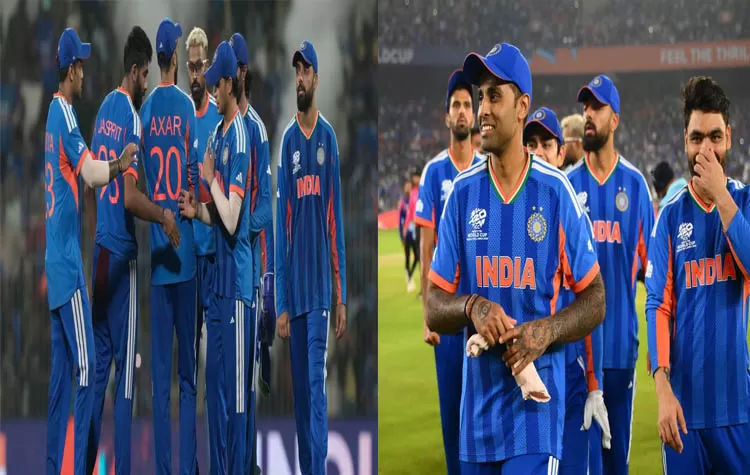
One Big Win Can Reset Team India’s T20 Campaign
- The team needs to analyze their loss because South Africa defeated them in their recent match. The team received heavy criticism from fans and analysts who doubted the team's tactical approach and discipline and individual player skills. The team did not perform to its standard in that match.
- The squad needs to demonstrate their potential through more than one defeat. The top seven batters have shown match-winning ability in many tournaments. Their game becomes more powerful when they create partnerships. The team needs one strong performance to regain their momentum and confidence.
Abhishek Sharma Must Focus on Stability
- Abhishek Sharma remains a key player ahead of the T20 World Cup. Many supporters expected aggressive innings from him. Instead, he registered ducks in his first three matches. He scored 15 runs in the fourth game but failed to convert it into a big innings.
- T20 cricket requires players to develop their attacking shot techniques. Players need to develop their ability to remain calm. A batter cannot hit every ball for boundaries. He needs to understand pitch conditions to determine his hitting schedule. Abhishek creates problems for bowlers because they feel pressure when he stays at the crease. He needs to rebuild his confidence to restore his performance level from before the World Cup.
Tilak Verma’s Role at One-Down Is Crucial
- The one-down position carries high responsibility in T20 matches. Tilak Verma requested this role and secured it. However, recent performances show visible pressure. His fielding, once sharp, has also declined.
- Tilak needs to return to his original playing style. The player starts to develop an innings by batting at a slower pace before increasing his speed. This method suits the team’s balance. If he recalls his Asia Cup final performance against Pakistan, he can regain rhythm and stability for the side.
Hardik Pandya Must Lead with All-Round Impact
- Hardik Pandya displays both experience and self-assurance. He played a key role in past tournaments which included his participation in the last T20 World Cup. He achieved success as a batsman and bowler because he performed in all aspects of the match including his work during the final championship game over.
- The current situation requires him to demonstrate the same leadership abilities he previously showed. The team needs to win two upcoming games with convincing results. Hardik needs to dominate the bowlers when he bats at number five or six. He needs to create different bowling speeds and pitching directions. He needs to create unpredictable bowling patterns which will help him succeed at this stage. His work will depend on his ability to generate energy and maintain discipline and make intelligent decisions.
Shivam Dube’s Dual Responsibility
- Shivam Dube plays as an attacking batter at number six. His aggressive intent remains clear. Fans trust his ability to finish games.
- Team management also expects value from his medium-pace bowling. On slower pitches, variation in speed becomes effective. Dube can use his slower deliveries to create problems for batters if he maintains control. His current bowling ability holds equal worth to his batting skills.
Respect Every Opponent
- Zimbabwe appears less powerful than top-ranked teams. Yet, underestimating any side creates risk. Australia and Sri Lanka have faced unexpected setbacks in tournaments before. Cricket rewards discipline, not reputation.
- Team India must display intense performance because they are the defending champions. The team needs to avoid repeating their past mistakes which will prevent them from reaching the semifinals. The team needs to show controlled aggression which will help them maintain their focus throughout the game.