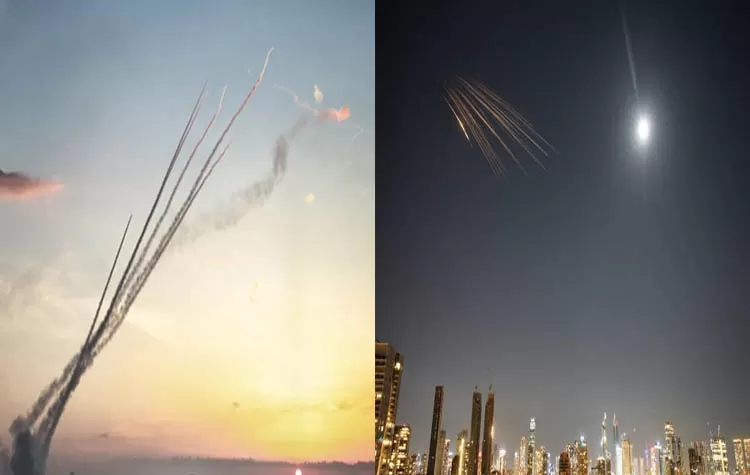
Israel Claims Iran Is Using Cluster Munitions In Ongoing Conflict
Continuing Conflict in West Asia
- The US-Iran conflict remains active despite the recent US-Iran Peace Agreement announcement. The US President Donald Trump indicated that the ongoing Iran War would enter its concluding phase. The military operations in West Asia continue without any indication of a forthcoming halt.
- The United States and Israel continue their operations while Iran conducts its own attacks. The Israeli Prime Minister Benjamin Netanyahu administration reported that multiple Iranian missiles contain cluster munitions. The Israel Defense Forces (IDF) reported that Iran launched 300 ballistic missiles which contained cluster bomb payloads.
Missile Incident Near Jerusalem
- Israel has faced Iranian missile attacks since the warfare started. The IDF reported that several missiles were intercepted on Tuesday. One missile which contained a large warhead detonated outside of Jerusalem.
- Video footage of the incident has appeared online. The Israeli military officials reported that the warhead detonated above ground. The explosion distributed several smaller explosives across an area with a radius of about 10 kilometers. Two people died in the incident.
- According to Israeli officials these cluster munitions create major obstacles for their air defense systems.
Previous Allegations of Cluster Bomb Use
- The 12-day Iran-Israel conflict which took place in June 2022 raised concerns about the use of cluster munitions. Amnesty International reported that Iran used cluster bombs during that period. The organization stated that Iran launched these weapons at least three times against Israeli territory.
- Amnesty based its findings on analysis of photos and videos from the conflict.
What Are Cluster Bombs?
- Cluster munitions function as explosive weapons which generate aerial detonation. The initial explosion produces multiple smaller explosives which scatter across the surrounding area. The smaller explosives spread across a broad region while striking several different locations simultaneously.
- The weapons can be used against targets located about 24 to 32 kilometers away. Their destructive effect covers a wider area than many standard bombs.
- The main problem involves potential harm to people who do not take part in combat. The smaller sub-munitions can fall across populated areas. Sub-munitions have the ability to remain on the ground until they produce an explosion. The explosives can stay buried in the earth until they create a hazardous situation. The situation creates a continuous threat which persists from the end of combat until the present time.
International Ban on Cluster Munitions
- The 2008 conference resulted in multiple countries signing an international treaty which prohibits the use of cluster munitions. The agreement prohibits the production, storage, transfer, and use of these weapons.
- The convention received signatures from 112 countries and 12 organizations. However, several countries did not join the agreement. These include Iran, Israel, India, the United States, China, and Russia.