
Rising Tensions In The Strait Of Hormuz: U.S. Blockade And Iran’s Response
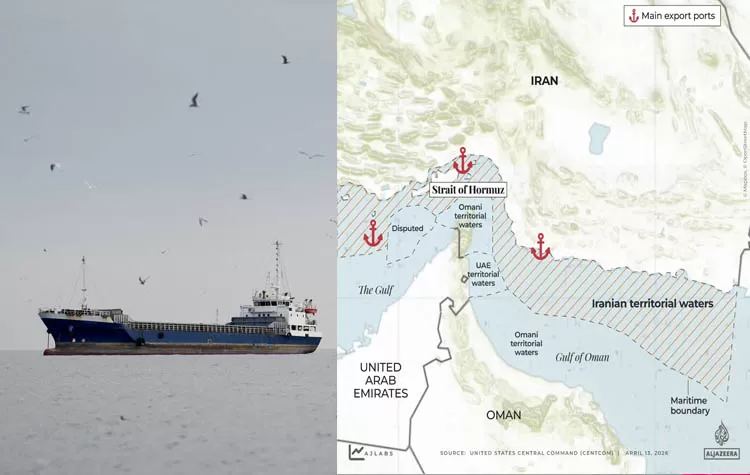
The United States and Iran have entered a new phase of their ongoing conflict which now requires direct military involvement to handle diplomatic relations. The world now faces global political and economic challenges because the situation has progressed from diplomatic problems to actual naval battles.
A New Phase in U.S.–Iran Relations
- The relationship between the two nations has declined since their recent negotiation efforts failed. The diplomatic discussions that took place in Islamabad ended without a successful agreement. The United States implemented a maritime blockade against Iran less than one day after announcing their new policy.
- The action marks a transition from negotiation processes toward law enforcement activities. The actions create higher possibilities for military conflicts to occur in an area which already holds major strategic value.
How the Strait of Hormuz Blockade Is Being Enforced
- The blockade started at 7:30 PM (Indian Standard Time) on Monday. The U.S. Navy deployed a large number of forces to monitor and control ship movement near the Strait of Hormuz.
- U.S. Central Command reports that naval units are stopping ships which have connections to Iranian ports. The operation includes all vessels which enter or exit those ports. Officials said that ships heading to destinations outside Iran would experience only minor operational interruptions.
- The operation aims to decrease Iran's access to sea trade routes while maintaining essential global shipping movements throughout the area.
Strategic Importance of the Waterway
- The Strait of Hormuz exists as one of the most essential maritime routes which ships use to navigate between various parts of the world. The narrow channel serves as a path through which most of the world's oil supply travels.
- Energy markets and worldwide trade activities face disruption whenever this region experiences interruptions. The oil-importing nations face increased expenses and unpredictable outcomes whenever the slightest restrictions become enforced.
- The strait between two nations serves as a major international news story because it attracts global public interest and international concern.
Statements from U.S. Leadership
Former President Donald Trump issued strong warnings about the blockade which he viewed as a dangerous situation. His statements focused on deterrence and military readiness.
Military Claims and Deterrence Signals
- Trump claimed that U.S. forces have already destroyed 158 Iranian vessels. He stated that these ships no longer have any operational capacity. He also mentioned that some Iranian fast attack vessels remain undamaged.
- He issued a warning that all vessels which approach the blockade zone would face instant destruction. His message revealed that authorities would apply strict enforcement measures which they would not permit anyone to contest.
- He compared the operation to U.S. operations which target maritime drug trafficking. He stated that the current situation would follow the same rules which govern interception and control methods.
- Iran has responded with both caution and strong language. Officials warned that blocking its ports would lead to serious consequences.
- The response shows that both parties face dangerous consequences. The situation will escalate to direct conflict which will produce regional instability if both sides continue to escalate tensions.
- Analysts have expressed concern that both sides may continue to increase pressure rather than return to negotiations.
Potential Global and Economic Impacts
- The blockade will create effects that extend beyond the local area. The uncertainty of supply routes will cause oil prices to react. Higher risk conditions will lead to rising shipping costs.
- Energy import dependence from the Gulf will create economic difficulties for countries. Global markets will respond to the possibility that disruptions will last for an extended period.
- The blockade will create instability in the trade corridor because its boundaries remain undefined.
What Could Happen Next
- Several outcomes are possible. The situation could stabilize if diplomatic talks resume. It could also escalate if either side takes further military action.
- Much depends on how strictly the blockade is enforced and how Iran chooses to respond. Other global powers may also play a role in shaping the next steps.
- For now, the situation remains fluid, with both caution and concern guiding international reactions.
Tags Cloud