
India Holds 74 Days Of Strategic Oil Reserves
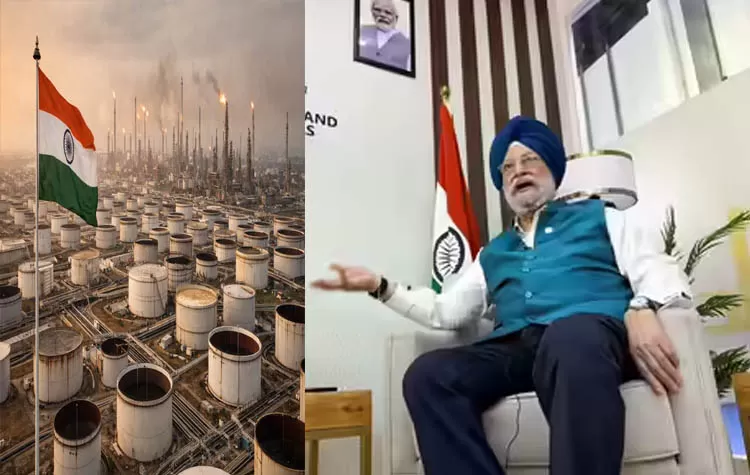
India currently maintains crude oil reserves which can sustain operations for 74 days. The government confirmed this in response to concerns about possible supply disruptions linked to global geopolitical tensions which included Iran–US developments.
Union Petroleum Minister Hardeep Singh Puri stated that the existing reserves provide short-term security. However, he also noted that the country must increase its reserves. According to international energy norms countries should maintain reserves for 90 days of consumption. The government is working toward this target.
Role of Strategic Petroleum Reserves
- Strategic petroleum reserves support energy security during emergencies. These emergencies may include war and sanctions as well as major global supply disruptions. In such situations stored crude oil provides access which helps to stabilize domestic supply and to control price fluctuations.
- The reserves function as a protective buffer. The reserves function to decrease the effects which follow sudden interruptions of imports. They also provide the government with time to arrange alternative supplies.
Where India Stores Its Oil
India stores its strategic oil in specially constructed underground rock caverns. These facilities are located in
- Visakhapatnam, Andhra Pradesh
- Mangalore, Karnataka
- Padur, Karnataka
The combined storage capacity of these facilities amounts to approximately 5.33 million tonnes.
The government is expanding its capacity through additional facilities which are currently under development at Chandikhole in Odisha and at Padur. The government has also proposed new storage sites at Bikaner in Rajasthan and Bina in Madhya Pradesh.
Design and Safety of Underground Caverns
Engineers constructed these storage sites through their use of advanced tunneling methods and controlled blasting techniques. The design supports long-term crude oil storage.
Underground caverns provide multiple benefits which exceed the advantages of surface tanks:
- The construction costs of the project will decrease through reduced expenses for building and operating the system.
- The system provides stronger protection against fire and air attacks and natural disasters.
- The system effectively prevents oil evaporation from the storage facility.
- The system includes powerful systems to prevent leaks.
- The system includes measures which protect the environment.
The design of these facilities ensures they will remain operational while protecting all safety requirements. The design of the facility prevents all forms of contamination and pollution.
Management and Oversight
- The Indian Strategic Petroleum Reserves Limited (ISPRL) manages these reserves. ISPRL operates under the Oil Industry Development Board. The board operates under the authority of the Union Ministry of Petroleum and Natural Gas.
- India continues to expand its strategic petroleum reserves to strengthen long-term energy security and align with global standards.
Tags Cloud