
Neal Katyal Plays Key Role In Supreme Court Ruling On Trump Tariffs
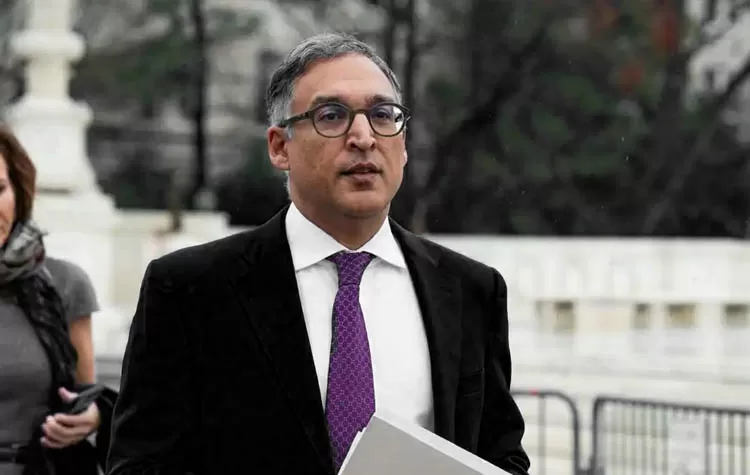
- Neal Katyal who identifies as Indian-American worked on the Supreme Court case about tariffs which former President Donald Trump established.
- He represented small business owners and Democratic-leaning states in their legal challenges against the tariffs that they had filed through petitions. He argued that the International Economic Emergency Powers Act (IEEPA) from 1977 should not serve as the legal basis for imposing extensive tariffs.
- Katyal declared that the tariffing system which affected all nations brought about unfairness and unconstitutional outcomes. After the verdict he declared that the Supreme Court used its authority to safeguard constitutional rights through the enforcement of legal procedures. He called the decision a historically important ruling.
Legal Argument Against Use of IEEPA
- Katyal argued that the president’s authority under IEEPA does not extend to broad tariff measures. He told the Court that such actions exceeded constitutional limits. He emphasized that the Constitution sets clear boundaries on executive power.
- The Supreme Court ruling supported this view. The decision reinforced the principle that presidential powers are subject to constitutional checks.
Early Life and Education
- Neal Katyal was born in Chicago to Indian immigrant parents. His mother became a doctor while his father worked as an engineer.
- Katyal graduated from Yale Law School. He began his career as a law clerk for Supreme Court Justice Stephen Breyer. This role shaped his experience in constitutional law.
Public Service and Career Highlights
- In 2010 Katyal became the U.S. Solicitor General when President Barack Obama appointed him to that position. He presented the federal government case to the Supreme Court in this position.
- He has argued more than 50 cases before the Court. Over the years, he has challenged several policies introduced by Donald Trump. In 2017, he argued cases related to travel restrictions imposed on certain countries.
- Katyal also wrote the book Impeach: The Case Against Donald Trump. He later served as a special prosecutor for the state of Minnesota in the murder case of George Floyd. The case received national and international attention.
- For his service, Katyal received the highest civilian award from the U.S. Department of Justice.
Continued Influence in Constitutional Law
Neal Katyal remains an active advocate in major constitutional cases. His work often focuses on executive authority, civil liberties, and the limits of presidential power. Through his arguments before the Supreme Court, he continues to shape important legal debates in the United States.
Tags Cloud