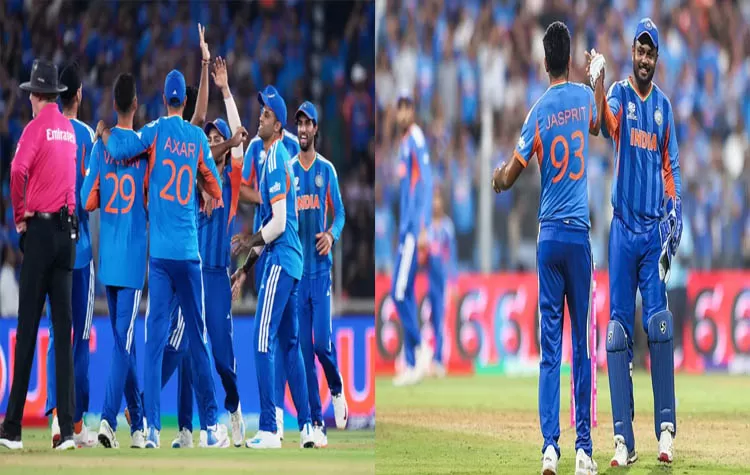
India Must Adjust Strategy For The Final Match
- India reached the final match through their two different types of performances. The Indian team entered the tournament with high expectations while playing at home. The team has reached the final. This is a positive outcome. However, the performances so far have not always reflected the level expected from a champion team.
- South Africa played strong cricket during the tournament but suffered a heavy defeat in the semi-final. In a final, the result matters more than the style of victory. Indian fans now want the team to perform well in the final and win the trophy. According to India's previous matches the team needs to change both their strategic approach and their implementation of plans.
Bowling Remains a Major Concern
- India's main problem originates from their bowling attack. Jasprit Bumrah has been the most reliable bowler. The other bowlers have experienced difficulties in delivering dependable performances.
- The captain experienced restricted choices during the semi-final match. The bowlers delivered runs at a high rate. Varun Chakravarthy and Axar Patel did not succeed in creating a major impact through their spin bowling. Arshdeep Singh and Hardik Pandya both failed to deliver dependable performances as fast bowlers.
- The captain gave the final over to Shivam Dube who serves as a pace all-rounder because Axar failed to bowl. He began his performance by delivering three consecutive balls which he bowled with accuracy. The next three balls resulted in six runs being scored. The situation could have been worse if the earlier deliveries had also been hit. The choice to use Dube as a bowler showed that the team lacked proper bowling resources and adequate game strategies.
Possible Changes in the Spin Department
- Varun Chakravarthy has struggled since the Super 8 stage. His recent performances suggest a drop in confidence. The team management needs to include Kuldeep Yadav in the final because of his improved performance.
- The pitch conditions appear suitable for spin bowling. The spin attack would improve through the combination of Varun Axar Patel and Kuldeep Yadav.
Pace Options Need Evaluation
- The Pace Options warrant assessment for their present status. Arshdeep Singh has shown mixed performances in the tournament. He delivers excellent balls at certain times, but he loses control during other moments. The bowler should not have thrown wides during such an important match as the semi-final.
- The team management will evaluate Mohammed Siraj as a potential replacement for the openers. Siraj pitched well during his first match of the tournament against the United States.
New Zealand’s Batting Strength
- New Zealand possesses a powerful batting lineup. Finn Allen and Tim Seifert have maintained their attacking style of batting throughout the tournament. Their performances reached high levels during the semi-final match.
- The team also includes dependable batters such as Glenn Phillips, Daryl Mitchell, and Rachin Ravindra. The batting unit becomes dangerous because of its deep batting strength.
Importance of Tactical Bowling and Fielding
- India needs to develop its match strategy through both pitch assessment and opponent batter analysis. Bowlers need to target specific weaknesses of opposing players. The fielding positions should serve to establish these strategies.
- The team needs to minimize all extra runs. Wide balls and unnecessary extras can increase pressure on the bowling side.
Using Bumrah Effectively in the Powerplay
- Former cricketers have suggested using Jasprit Bumrah early in the innings. India needs to use two powerplay overs to control aggressive batting from openers Allen and Seifert who play for the opposing team.
- India needs to establish a precise plan which requires them to execute controlled pitching performances while making smart roster decisions. These factors can help India contain New Zealand’s strong batting lineup and improve their chances in the final.