
India And Italy Expand Strategic Partnership Through Trade, Technology, And Diplomacy
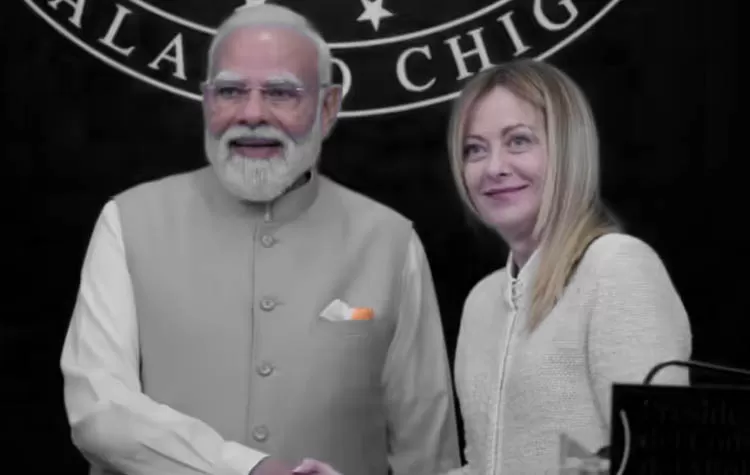
India and Italy have agreed to deepen their strategic partnership , but with a more pronounced emphasis on trade and investment, plus technology, and then yes geopolitical cooperation . During Prime Minister Narendra Modi’s trip to Italy , both countries said they will roll out fresh ideas to reinforce their bilateral ties and broaden cooperation across multiple areas that matter for longer-term economic growth.
The exchanges between Prime Minister Modi and Italian Prime Minister Giorgia Meloni also made it clear how much India–Italy relations are now being treated as essential within the larger India–Europe setup. Apart from the formal diplomatic sessions, the visit caught attention in a different way too—there were a number of cultural moments and some social media bits that ended up getting wide visibility globally.
India and Italy Strengthen Bilateral Engagement
Prime Minister Modi had extensive one on one talks with Prime Minister Meloni in Rome. The leaders reviewed the India–Italy Joint Strategic Action Plan for 2025–29 , and they agreed to speed up its execution.
To keep everything aligned, both sides decided to create a committee that will be headed by their Foreign Ministers. That group will watch the progress in key fields , and also help with steady communication between the two governments .
Before meeting Meloni, Modi also met Italian President Sergio Mattarella. In those discussions they covered trade, education, innovation, investment, cultural exchange, and the newer wave of emerging technologies .
Overall, these meetings seemed part of a wider push by both countries to nurture a stable , long-lasting relationship that goes beyond the usual diplomacy script.
Trade and Investment Become Central Priorities
Trade growth kinda became one of the main results from the visit, you know. India and Italy’s bilateral trade touched 14.25 billion Euros in 2025, and now both governments are trying to nudge it up to 20 billion Euros by 2029, in a pretty deliberate way.
The leaders talked through how to make business cooperation better , and how to build sturdier investment links between companies in both countries. They also looked at openings in manufacturing, infrastructure, clean energy, and advanced technologies, kind of a wide range.
India and Italy stressed innovation driven growth. So cooperation in startups, industrial technology, and research partnerships is expected to play a bigger role in the relationship going forward, not just as a side thing.
They also backed quicker movement on the India–EU Free Trade Agreement , which could widen market access and, in turn, improve trade flows between India and European economies.
Focus Areas Beyond Commerce
The talks didn’t stop at trade and investment. India and Italy pointed to a set of strategic areas for future cooperation , including defense, energy, artificial intelligence, critical minerals, space research, and nuclear technology.
Both governments agreed to broaden academic and professional exchanges too. The plans cover more movement of students, researchers, skilled workers, and professionals between the two nations.
As of January 2025, around 186,833 Indians are living in Italy, while roughly 5,100 Indian students are studying there. These people to people ties keep supporting tighter economic and cultural relationships.
This growing partnership also mirrors a broader pattern where European countries are increasing their involvement with India in technology, supply chains , and talent development.
Shared Position on Global Security Challenges
Global security issues formed another major chunk of the discussions. Modi and Meloni said they were concerned about tensions in West Asia, and they backed efforts for de-escalation, talk, and peace, kind of in that broad direction.
The leaders also stressed working together against terrorism. Modi added that democratic nations must keep going to stop the financial networks that back terrorist activities. Like no room, essentially.
Defense cooperation got extra attention too, with a joint declaration signed during the visit. While no specific operational details were shared in public, the agreement still points toward stronger security coordination between the two countries, in practice.
For both governments, strategic cooperation now seems to include economic security , technology resilience, and geopolitical stability, all at once, not just one lane.
Cultural Diplomacy and Public Engagement in Italy
Modi got a ceremonial welcome after arriving in Rome. Members of the Indian diaspora gathered to greet him, and Italian performers put on Indian classical dance forms, including Kathak, Kuchipudi and Bharatanatyam, with a nice flow.
The Prime Minister also praised Italian musicians who performed with Indian instruments, like sitar, santoor, bansuri and tabla.
Prime Minister Meloni hosted an official dinner for Modi. Later, the two leaders visited the Colosseum together, and the selfie Meloni posted spread quickly across social media platforms, almost immediately it felt.
Modi also met Italian painter Giampaolo Tomassetti, who is known for his long-standing interest in Indian culture. Modi said that for decades, the artist has helped promote appreciation for Indian traditions, sort of quietly but consistently.
These cultural moments helped strengthen the lighter diplomatic side of the visit, and they added to a more positive public profile for India–Italy relations, overall.
FAO Recognition Highlights Food Security Efforts
During his visit to Rome, Prime Minister Modi received the Agricola Medal from the Food and Agriculture Organization (FAO) , a specialized agency under the United Nations.
FAO Director-General Qu Dongyu presented the award, in recognition of Modi’s efforts connected to food security, agriculture, sustainability and rural development.
While speaking at the event, Modi called the medal a kind of recognition of India’s contribution to global food security initiatives.
This recognition also, seemed to add an international development angle to what was already a broader diplomatic visit.
Domestic Political Reactions in India
The trip then, triggered political back-and-forth inside India.
Congress leader Rahul Gandhi criticized Modi , saying he was spending time on public relations moves abroad when domestic economic problems are still there at home. He described the Prime Minister’s public appearances and social media content as a “gimmick” rather than governance.
Congress President Mallikarjun Kharge also expressed concerns about inflation, unemployment, currency depreciation and the growth in debt. He said ordinary people remain under strain, even as the government pushes international outreach.
In reply, Union Minister Piyush Goyal argued that opposition voices were simply uneasy about India getting more international recognition.
Overall, the exchange highlighted the ongoing political split on how foreign diplomacy should be balanced with domestic economic needs, and priorities.
Social Media Attention Around the “Melody” Moment
One of the most discussed bits from the visit involved Modi gifting “Melody” toffees to Prime Minister Meloni.
That gesture got a lot of eyes on it, because social media folks kept mashing together the names Modi and Meloni into a kind of nickname “Melody”. Later Meloni put out a video , where she thanked Modi for the gift, like pretty directly.
In just a few hours the clip sparked heavy engagement everywhere online. It was reported that the video pulled in roughly 120 million views across the social web, plus more than 7.4 million views on X alone.
Even if it was symbolic, the whole thing showed how modern diplomacy is doing more and more of its work through digital messaging and a polished public image. Casual or informal moments between leaders now can steer global perception right next to , or even as part of , official policy statements.
Tags Cloud