
Southwest Monsoon Arrival Delayed Across India
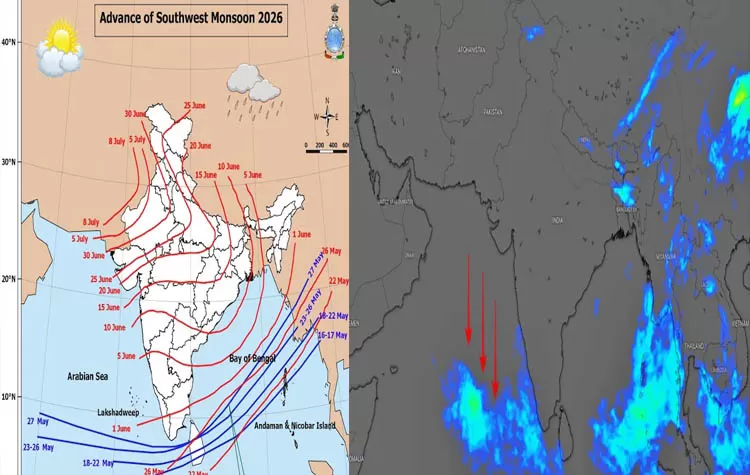
People in several parts of India are still getting hit by intense heat, because the Southwest Monsoon is moving more slowly than people expected. The India Meteorological Department (IMD) has now updated its forecast, for when the monsoon will first arrive over Kerala. This delay could also shift rainfall patterns, and the overall heat situation, in a bunch of states during June.
Hot weather keeps going, in many regions
Even now , high temperatures are impacting wide areas across the country. A lot of places are seeing dry conditions with harsh daytime heat. Because the monsoon is running late, there is less hope for quick respite from these conditions, at least for now.
Some states are already seeing temperatures climb. Weather officials are saying that hot and muggy conditions may stay around in the next few days, until the monsoon pushes further inland.
IMD revises the monsoon arrival estimate
The IMD now expects the Southwest Monsoon to reach the Kerala coast around June 4 or June 5. Earlier predictions had pointed to an arrival date close to May 26.
This updated schedule lines up with slower progress over the Arabian Sea, and nearby areas too. Weather experts claim the monsoon is creeping forward at a weaker rate, compared to how it usually behaves in a typical season.
What to expect over Kerala
Kerala normally becomes the first state to get the Southwest Monsoon. When it arrives there, it also signals the official start of the rainy season across much of India.
Last year , the monsoon reached Kerala on May 24, which was earlier than forecast. But this time, things are different because the atmosphere isn’t supporting fast movement, the way it did earlier.
Possible entry toward Telangana
Once it reaches Kerala, the monsoon is likely to move toward Telangana within about two to three days. The exact timing may depend on wind flow and the moisture levels during the first week of June.
Farmers and local authorities are keeping a pretty close eye on these updates, because when the rainfall shows up really matters for agriculture and water planning and all that.
El Niño slows down the monsoon
The IMD has tied the delayed monsoon to the influence of El Niño. El Niño is a climate pattern, it messes with ocean temperatures in the Pacific Ocean. And that shift, can nudge weather systems across various countries, including India.
In El Niño years, the monsoon winds may weaken, or they can move slower than usual. When that happens, rain can drop off, and the arrival of clouds that carry rain over the Indian subcontinent may get pushed back.
Officials also say this kind of behavior has already shown up during the ongoing monsoon season.
Rainfall may stay lower in some areas
The IMD also cautioned that in parts of the country, rainfall might stay under normal levels this year. Several regions could see less precipitation, due to changing climatic factors that are linked to El Niño.
If rainfall stays light, it can hit farming schedules, reservoir storage levels, and water access in certain places. States that rely a lot on seasonal rains could feel extra strain, especially if dry spells stretch longer than expected.
June heatwave conditions could linger
The IMD expects heatwave like conditions to persist in multiple states through June. The areas likely to stay affected include
- Uttar Pradesh
- Haryana
- Punjab
- Bihar
- Andhra Pradesh
- Odisha
- Gujarat
- Chhattisgarh
Even after the monsoon reaches southern India, these regions may still see high daytime temperatures for some time.
Health officials typically suggest people drink enough water, avoid long stretches in direct sunlight, and cut down on outdoor time during the hottest part of the afternoon.
What the monsoon delay could mean for people
- A delayed monsoon can affect daily life in many ways. Farmers may postpone sowing activities if rainfall arrives late. Water demand may also increase in cities and rural areas during extended heat conditions.
- Electricity consumption often rises during hot weather because of increased use of cooling systems. Delayed rainfall may also impact crop planning in rain-dependent farming regions.
- At the same time, weather experts note that monsoon progress can still change quickly depending on atmospheric conditions in the coming weeks.
Tags Cloud