
India–Oman Free Trade Agreement And India's Energy Security
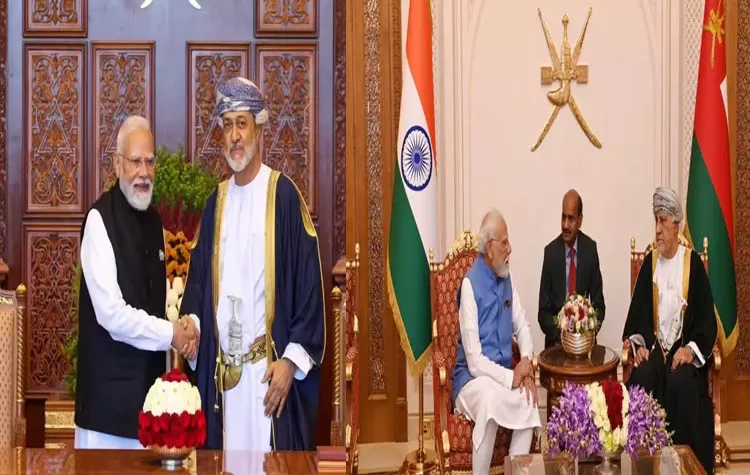
India relies pretty heavily on imported energy to keep up with its expanding economy. Since a sizable part of those imports comes from the Gulf, if something goes wrong with key sea lanes it can shake both availability and prices. In that sort of background, the India–Oman Free Trade Agreement (FTA) has kind of turned into a big deal in strategic terms. The deal helps tighten commercial links while also fitting into India’s push to make its energy supply chain more steady, and less unpredictable.
Why energy security is now a top priority for India
Energy security is basically a country’s capacity to secure reliable and reasonably priced energy inputs. For India, this matters a lot because it brings in large quantities of crude oil and natural gas from abroad.
At the same time, geopolitical tensions, regional unrest, and disruptions affecting shipping routes can bring a lot of uncertainty into energy markets. So India has been trying to diversify where it buys from, and to build closer relationships with major energy exporting partners.
The strategic role of the Strait of Hormuz
A critical passage for world energy trade
- The Strait of Hormuz is among the most vital maritime bottlenecks on the planet. About one fifth of global energy flows pass through that tight stretch of water. Oil and gas shipments coming from multiple Gulf states depend on this route to reach international buyers.
- So, because it’s so central, any disruption in the strait can quickly push energy prices up, and also disrupt global commerce.
Risks triggered by regional tensions
- From time to time, political and military tensions across West Asia have raised worries about how safe it is for tankers to move through the Strait of Hormuz. When shipping is interrupted, energy deliveries may arrive later and, transportation costs can climb , sometimes quite sharply.
- For countries that lean on Gulf energy imports, these risks stress how crucial it is to have fallback supply paths and trade networks that can really stand up to shock , even when things get messy.
Understanding the India–Oman Free Trade Agreement
Key Features of the Agreement
- The India–Oman Free Trade Agreement was basically meant to deepen economic cooperation between the two countries, not just in theory. It was signed during Prime Minister Narendra Modi’s visit to Muscat, and the whole thing started applying on June 1.
- Under the deal, a large part of the products shipped from India to Oman get duty free treatment. As per official notices, around 99.38 percent of Indian exports to Oman fall under tariff exemptions, so in practice they move with far less friction.
- India also lowered or outright removed duties on many items coming in from Oman, which should cover roughly 78 percent of all imported goods.
Sectors Expected to Benefit
A number of Indian sectors are likely to gain easier entry to the Omani market. Among the ones often listed are:
- Gems and jewelry
- Textiles
- Leather products
- Footwear
- Plastics
- Furniture
- Agricultural goods
- Engineering goods
- Pharmaceuticals
- Medical devices
- Automobiles
When tariffs drop, these industries can become more competitive and, step by step, grow their footprint across Oman.
How Oman’s Location Helps Energy Supply Stability
Ports beyond the Strait of Hormuz
- One of Oman’s quiet strengths is its geography. Instead of relying mainly on export routes that funnel through the Strait of Hormuz , as some Gulf states do, Oman’s coastline sits across the Gulf of Oman and also the Arabian Sea.
- Major ports like Salalah and Duqm are positioned outside the Strait of Hormuz. Because of that, trade and energy flows may keep moving, even if traffic through the strait gets interrupted , or tightened up for any reason.
Alternative Access for Energy Imports
- Trade analysts basically say that deeper economic links with Oman could give India a bit more wiggle room for sourcing energy. Having access to Omani ports brings another practical route for moving energy imports from that region too.
- Of course it doesn’t fully undo the importance of the Strait of Hormuz, but it may lower some of the hazards that come with relying on just one maritime corridor, and you know, that kind of single-rail dependence.
Changing Trade Patterns Between India and Oman
Growth in Energy Imports
- New-ish trade numbers point to energy imports from Oman becoming more and more meaningful. When tensions across West Asia disrupted the usual regional movement of goods, imports from Oman jumped quite a lot.
- In April, imports from other Gulf countries fell versus the year before. Meanwhile, imports from Oman went up sharply reaching around $1.5 billion. Crude oil along with urea made up a big chunk of what India bought.
- For the 2025–26 fiscal year, India imported products worth roughly $7.2 billion from Oman. Oil alone was about $1.6 billion, and liquefied natural gas (LNG) imports came to near $1.2 billion.
Indian Exports to Oman
- The trade relationship isn’t only about fuel. In the same fiscal year, India’s exports to Oman were close to $3.64 billion.
- Major export groups included refined petroleum products, steel and rice. The FTA is expected to help push more expansion in these areas , plus other sectors, by cutting down trade frictions.
Economic and Strategic Impact of the Partnership
The India–Oman arrangement provides upsides that go well beyond just cutting tariffs. More solid economic connections can back trade growth, open up investment opportunities, and encourage steady collaboration in energy and infrastructure, sort of a long-horizon plan.
Strategic standpoint wise , having closer engagement with Oman helps India make its presence feels stronger in the Gulf area. It also ties into wider efforts meant for boosting supply-chain resilience , while at the same time lowering exposure to local disruptions that can crop up in the region.
Opportunities and Limitations
The India–Oman Free Trade Agreement opens up fresh chances for companies and backs a more meaningful economic joining. Oman's position, along with its energy resources, brings practical advantages for India’s longer run energy planning, and that part matters a lot.
Even so, this agreement should not be seen as a full replacement for the Strait of Hormuz. That waterway still stays a central channel for world energy commerce. Instead, working with Oman can be read as a kind of flexibility enhancer , something that reduces risk inside India’s wider energy security approach.
Tags Cloud