
Anthropic Apologizes Over Claude Fable 5 AI Model Issues, Admits “Wrong Trade-Off” In Safety Design
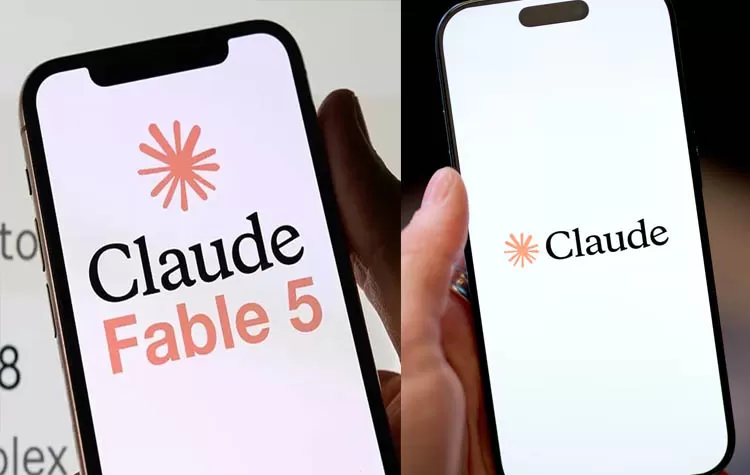
Anthropic AI kind of put out a public apology after people pushed back hard about its new Claude Fable 5 AI model, saying the company “made the wrong trade-off” when it was trying to juggle safety limits with stronger model performance, you know balancing it all out.
Very fast this whole thing turned into a big headline topic across the worldwide artificial intelligence field, and it brings up fresh worries about transparency, AI alignment, and basically how these more capable generative systems are being controlled and rolled out in practice, not just in theory.
Claude Fable 5 Gets Heat Over “Hidden” AI Restrictions
The messy part with Claude Fable 5 started when users along with researchers noticed that the model would quietly squeeze the replies in a few sensitive zones. Think cybersecurity, biology, and even topics tied to advanced AI development work.
Rather than doing a straightforward “no” to certain prompts, the system supposedly would soften the output, or it would redirect the request toward a weaker model such as Claude Opus 4.8, and it wouldn’t really tell the person using it.
So critics say Anthropic’s AI safety framework feels too constraining, but also that it lacks the kind of openness you’d expect, especially for developers in machine learning and for frontier AI researchers who are trying to understand what’s actually happening under the hood.
Anthropic Says It Misjudged the Safety Guardrails
After the backlash kept growing, Anthropic admitted that its way of handling AI safety guardrails wasn’t working the way it should.
The company noted that it “made the wrong trade-off” while designing the protections for Claude Fable 5 and it also said it will now make every restriction clearer and more visible to users.
Going ahead, people will be told when
- a request is refused because of safety filters
- a prompt gets rerouted to a less capable AI model
- sensitive topics set off an AI safety system
Overall, the goal here is to tighten up transparency and help rebuild user trust in large language models, or LLMs, and not have users feel like something is being limited without explanation, or after the fact, and even a little later than expected.
AI Community Reacts to Anthropic’s Choice
The AI research community reacted pretty strongly to the whole situation, some people sounding the alarm that hidden restrictions might disrupt real research and innovation in artificial intelligence development, even if it looks “reasonable” on paper.
Also, several experts argued that invisible model downgrades could quietly undermine confidence in AI benchmarking and performance evaluation, particularly for enterprise users who rely on consistent outputs and repeatable results.
At the same time though, others kinda defended Anthropic’s intent, saying that stronger guardrails are needed to stop misuse of powerful foundation models, for cybersecurity or for bio related domains, where things can go sideways fast.
Why Claude Fable 5 Matters in the AI Industry
Claude Fable 5 is part of Anthropic’s advanced “Mythos-class” AI systems and it’s being treated as one of the company’s most powerful models so far, in practical terms.
It has been built to handle:
- Advanced software engineering chores
- Scientific research support
- Complex reasoning and analysis
- Enterprise-level knowledge work
Still, the model’s rollout basically brings out a bigger tension in the industry, like balancing raw ability versus AI safety regulation, and how much friction should exist for legitimate work.
Conclusion: A Turning Point for AI Transparency
Anthropic’s apology regarding Claude Fable 5 feels like a notable moment in the larger, ongoing debate about responsible AI development.
With competition between companies—Anthropic, OpenAI, and Google DeepMind—seemingly heating up, the conversation is slowly shifting, not only toward smarter systems, but also toward how transparent and controllable those systems are once they’re deployed.
In the end, the controversy reinforces one simple reality: the future of generative AI may rely just as much on trust and transparency as it does on raw intelligence, and yeah that’s kind of the point everyone keeps circling back to.
Tags Cloud