
Anthropic Challenges US Ban On Fable 5 And Mythos 5 AI Models, Defends AI Safety Framework
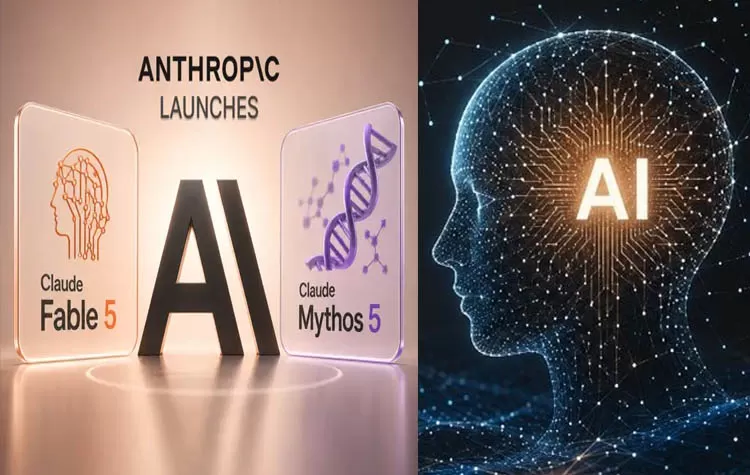
US Government limits access to advanced Anthropic AI models
Artificial intelligence company Anthropic has pushed back pretty hard against a recent US government move that restricts access to its advanced AI models, Claude Fable 5 and Claude Mythos 5. The firm put out a statement that ran longer than 700 words, and it said the decision might end up hurting AI innovation and the broader pace of tech progress.
This restriction is happening while concerns keep rising around AI safety, cybersecurity trouble, and national security ripple effects that come with next- generation artificial intelligence systems. As some reports claim, the government’s view is that these models could create security issues if they end up being reached by foreign entities, or, if they’re used in the wrong hands.
Anthropic says the government action stems from a misunderstanding
- In its reply, Anthropic said it thinks regulators may have misread what the real risks are with the Fable 5 and Mythos 5 models. The company stressed that before anything went public the systems had undergone extensive testing, safety checks, and protective guardrails which were added ahead of time, not after.
- Anthropic also argued that regulators acted without enough evidence and it warned that heavy handed limits on advanced AI technologies could slow innovation, and shrink the practical value these systems offer to businesses, researchers and developers across the world, even when the use is legitimate.
Claude Fable 5 built with stronger AI safety measures
The company pointed out that Claude Fable 5 was developed as a safer iteration of its more powerful Mythos-class technology. There are built in safeguards that automatically clamp down on responses tied to sensitive areas like cybersecurity biology, and other high risk fields.
Anthropic said these protective systems are meant to stop misuse, yet still let people make use of, cutting-edge AI capabilities for building software, doing scientific research, analyzing data, and even running enterprise applications. Not a simple thing, obviously, but it kinda sounds like that was the goal.
AI safety debate is getting louder across the industry
- This whole situation points to a bigger global conversation about AI regulation. More governments are looking closely at how strong AI models should be governed, especially as they start doing complex reasoning, coding, research, and more autonomous style tasks.
- Some leaders in the industry say yeah safety matters, but too many limits could slow down innovation, and make it harder to stay competitive in the fast moving AI race. Anthropic, meanwhile, is pushing for balanced, evidence led rules that deal with real dangers, without tying tech in unnecessary knots or, you know, limiting progress just because it’s powerful.
Recent pushback after Claude Fable 5 safety restrictions
The new controversy comes after developers and researchers criticized Claude Fable 5 for having very strict safety controls. Earlier this week, Anthropic admitted that a few of their guardrails were, in their words, too restrictive, and they apologized to users. They also said it made the “wrong trade-off”, between safety and usability.
Since then, the company says it will be more transparent going forward, by letting users know more clearly when a request gets restricted, or when it is rerouted through other AI systems. The stated aim is to boost user confidence, while keeping solid safety protections in place.
Whats next for Anthropic and its AI models ?
Even with the restrictions placed by the government, Anthropic is still trying to restore access to Fable 5 and Mythos 5 as soon as is possible. The company keeps talking with regulators and policymakers , while also pushing for a more cooperative approach to AI governance.
Because AI regulation is turning into a big, global policy problem, the final result of this dispute might shape how future frontier AI models get built, put in use, and governed across the wider tech sector.
Tags Cloud