
Nestle India Responds To Social Media Claims About Maggi Noodles
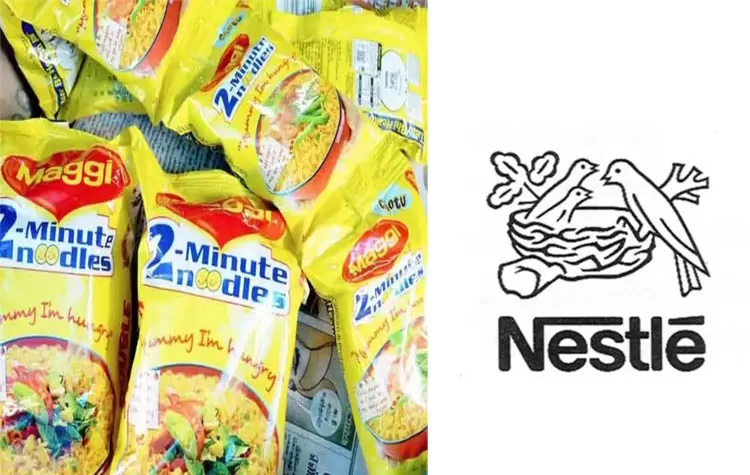
Nestle India has pushed back on allegations that are doing the rounds on social media, saying that worms were found in Maggi noodles. The company said that these claims don’t line up with the evidence that is currently available, and it also repeated that it stays serious about product quality and food safety norms.
This clarification came out as a filing to stock exchanges, after the issue got some public steam online , and people started talking more broadly.
Social Media Allegations Draw Attention
- The whole thing kicked off when a social media user , allegedly, stated that worms were present in a packet of Maggi noodles. The post picked up traction fast , and then there were lots of conversations among consumers about whether the popular instant noodle brand is safe and good quality.
- After the allegations started spreading, the Food Safety and Standards Authority of India (FSSAI) told Nestle India about the complaint. From there, the company said it began trying to collect more context, and to validate the claim properly.
Company Says No Product Samples Were Received
Nestle India has said, though, that it hasn’t gotten any actual product samples from the person who made the allegation. So without the reported pack, the company said it can’t directly inspect the exact packet that was being discussed in the social media post.
Nestle India also noted that it tried to reach out to the complainant , to get more details and to dig deeper into the matter. But, the company said it was not able to get through or collect the information required for a detailed review.
Laboratory Testing Found No Evidence of Worms
To deal with the safety concerns, samples of Maggi noodles were tested in a laboratory that is accredited by the National Accreditation Board for Testing and Calibration Laboratories (NABL).
Food safety regulations compliance
- Nestle India said, in a pretty straightforward way, that its products are manufactured and checked in line with the food safety rules that apply. The company also mentioned that the laboratory report confirmed it met FSSAI standards, those rules that cover food quality and safety across India.
- Food manufacturers are expected to use tight quality-control procedures across sourcing, production, packaging and even distribution. Following these rules is meant to help make sure what finally lands with consumers is safe to eat, not just “looks fine”.
Nestle India keeps re-affirming quality
In its statement , Nestle India added that consumer health and product quality are still the main focus. It stressed it uses established quality-control measures and it monitors manufacturing processes on a regular basis, not only when something happens.
Nestle India further said it won’t bend on safety standards, and that it stays committed to providing products that match regulatory requirements, period.
Public concerns and why verification matters
Food-related incidents can trend fast, especially on social media. While online platforms can push worries into the open quickly, companies and regulators typically depend on product samples, lab testing, and verifiable facts to judge those claims.
Here, Nestle India claimed that accredited laboratory testing did not find worms in Maggi noodles, and that the tested samples were in compliance with food safety regulations.
Tags Cloud