
India-UK Trade Agreement Set To Take Effect On July 15: Economic Impact, Trade Benefits, And Business Opportunities
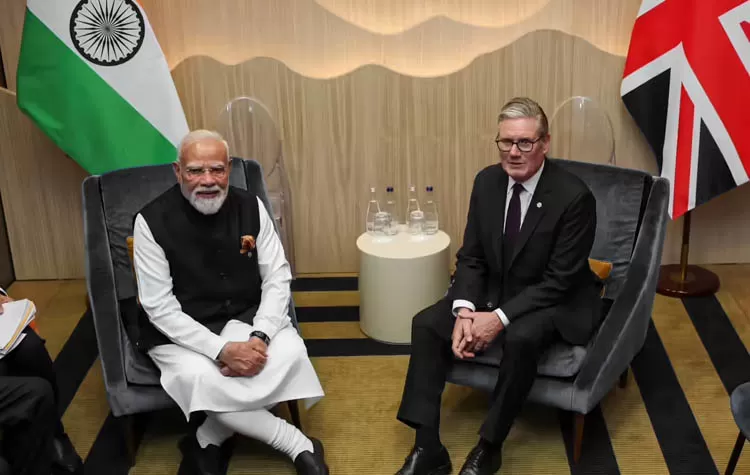
The India-UK Trade Agreement will officially come into force on July 15 , and this is a major development for the economic relations between the two countries . Indian Prime Minister Narendra Modi and UK Prime Minister Keir Starmer confirmed the implementation date after a bilateral meeting held on the sidelines of the G7 summit, in Evian France.
The agreement , which is formally known as the India-UK Comprehensive Economic and Trade Agreement, is designed to strengthen bilateral commerce, push investment inflows, and open fresh avenues for companies, workers and consumers in both nations .
A New Phase in India-UK Economic Relations
Agreement Implementation Date Confirmed
The trade agreement was finalized almost a year ago , and both governments have now confirmed that it will take effect on July 15. This announcement looks like a pretty substantial step ahead in cooperation between two of the biggest economies on the planet .
Prime Minister Modi described the pact as a historic milestone, something that can further deepen economic links and back India’s long-term development goals .
Announcement at the G7 Summit
The confirmation came during conversations between the two leaders at the G7 summit. The meeting underscored how more and more , India-UK economic relations matter, and how both sides are keen on broadening trade and investments.
It is expected that the agreement will help improve market access, cut through some trade frictions , and encourage more business collaboration.
Key Features of the India-UK Trade Agreement
Tariff Reductions on Major Product Categories
One of the most notable parts of the agreement is the reduction of tariffs across a range of products.
As per the UK government :
- Tariffs on certain alcoholic beverages will fall from 150% to 40%.
- Tariffs on vehicles will decrease from 100% to 10%.
- Tariffs on beauty and cosmetic products will be reduced to 22%.
These changes, are kinda meant to make the products more competitive and help with getting easier access to each countries market.
There’s also market access for companies in both countries , and the agreement contains wide tariff liberalization pledges. The UK says 99% of its tariffs , and 90% of India’s tariffs, will be liberalized under the deal.
If trade barriers become lower, businesses might cut their costs, stretch their exports, and find new clients more easily, not just the usual ones.
Now the expected economic impact
Projected increase in bilateral trade
The India UK Free Trade Agreement is expected to boost commercial activity between the two countries quite a lot. UK estimates suggest bilateral trade could rise by about £25.5 billion per year, which is roughly ₹3.22 lakh crore. More trade traffic may unlock fresh openings across manufacturing, services, agriculture and consumer markets too.
Potential contribution to India’s economic growth
The agreement is also expected to back India’s economic expansion. Some estimates indicate India’s GDP could increase by around ₹64,474 crore as trade and investment activities pick up.
With better market access , production may grow, exports may strengthen, and foreign investment could increase later on.
Benefits for Indian and UK businesses
Opportunities for exporters and manufacturers
For companies that want to grow internationally, the agreement gives a clear set of advantages. Indian exporters should benefit from lower tariffs on products entering the UK market. With fewer trade barriers , competitiveness tends to improve, and that can help businesses sell more abroad, even beyond their usual routes.
For UK manufacturers, easier access to India large consumer market might open up some fresh, kinda new growth chances.
Advantages for startups, SMEs, and investors
SMEs, startups, and investors may get a boost from the deal too, in ways that are easy to miss at first.
Lower tariffs , and better trade conditions could push more of this kind of activity:
- cross-border partnerships
- business expansion
- foreign direct investment
- supply chain cooperation
- innovation and technology exchange
Taken together, these moves could lead to job creation and wider economic activity, across multiple regions.
Sector-Wise Trade Opportunities
Textiles , Footwear, and Food Products
A number of Indian export sectors are expected to do better once access to the UK market improves.
The kinds of products that could benefit include:
- textiles and garments
- footwear
- selected food products
With reduced tariffs, these industries can compete more effectively and grow their footprint in international markets.
Automotive, alcoholic beverages , and consumer goods
The agreement also touches areas that matter a lot for UK exporters.
Lower duties on:
- vehicles
- alcoholic beverages
- beauty and personal care products
can make these goods more affordable and lift trade volumes between the two countries.
Policy Significance and Strategic Importance
Trade liberalization commitments
This agreement counts as one of India biggest trade liberalization efforts. By cutting tariffs across a broad set of products both countries want a trading setup that is more open, and also more predictable.
Those steps may help strengthen business confidence, and support longer-term investment choices, not just short-term gains.
Strengthening India-UK relations
Beyond the obvious economic side, the deal shows deeper strategic alignment between India and the United Kingdom.
Stronger trade ties can support collaboration in areas such as:
- Technology
- Innovation
- Education
- Manufacturing
- Investment
The deal may also serve as a foundation for broader economic partnerships in the future.
Tags Cloud