
India Completes 2,843-Km Dedicated Freight Corridor Network: PM Modi Inaugurates Final Western DFC Sections
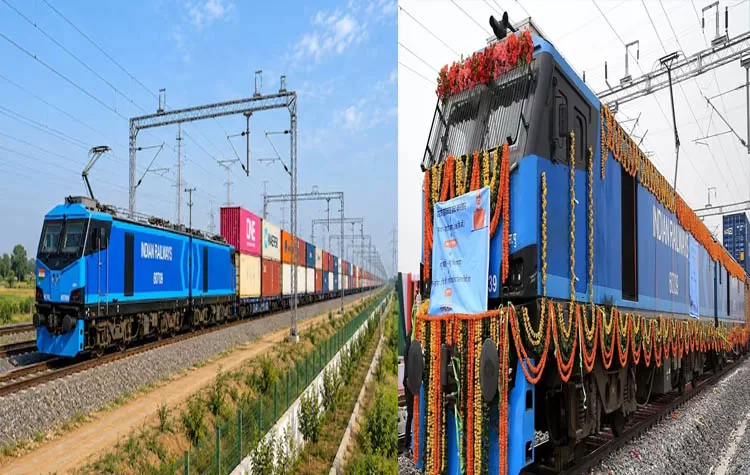
India has completed a significant milestone with regards to railway and logistics infrastructure.
Prime Minister Narendra Modi has today unveiled and commissioned three significant sections of the Western Dedicated Freight Corridor (WDFC) completing India's first dedicated freight rail backbone. The commissioned routes cover 326 route kilometres and were developed at an investment of more than ₹20,700 crore.
Three Significant Sections of Western DFC Inaugurated by the Prime Minister
The three sections inaugurated by the Prime Minister are:
- New Sanand (North) – New Makarpura
- New Umbergaon – New Saphale
- New Saphale – New Jawaharlal Nehru Port Terminal (JNPT)
The commissioning of these three new sections completes the construction of the 1,506 km Western Dedicated Freight Corridor which connects the western port region with the major industrial and consumption centres in northern India. Coupled with the 1,337 km Eastern Dedicated Freight Corridor, which runs from Ludhiana to Sonnagar, the completed Western and Eastern DFC systems now form a 2,843 km dedicated freight rail network.
Significance of the Dedicated Freight Corridor
The DFC has been designed for freight transportation and provides for freight trains to operate separately from much of the conventional passenger railway network. This is expected to enhance freight-train speeds, cargo reliability and railway capacity while also adding alternate routes for passenger trains on the conventional rail networks.
The DFC corridors can accommodate double-stack container trains and higher axle-load freight trains, enabling the transportation of significantly more cargo.
Boost to Logistics Infrastructure and Supply Chain
The completed DFC network is expected to enhance India's logistics infrastructure network, enabling stronger links between industrial hubs, production centres, markets and major ports. The Western DFC connects directly to the Jawaharlal Nehru Port, enabling faster movement of export-import cargo as well as enhancing the connection between the ports and the northern hinterland.
As per the government, the DFC is also helping to decongest conventional railway routes while also enhancing overall freight transportation efficiency.
443 Freight Trains Operated Daily on Average
The DFC network has already witnessed significant operational scale with government data indicating that an average of about 443 freight trains are operated per day on the DFCs. The network has also helped in augmenting freight capacity with freight traffic shifted away from conventional railway routes enabling Indian Railways to operate additional passenger and freight services on the conventional rail routes.
Recent railway data cited in various reports highlighted that the operational DFC sections had seen around 5.2 lakh freight train trips, indicating the significant contribution of the DFC to India's freight transportation network.
Major Infrastructure Push by India
The completion of the DFC network is a significant boost to India's efforts to expand its railway, road and multimodal logistics infrastructure. The dedicated freight network is expected to play an important role in supporting industrial growth, accelerated freight transportation, export competitiveness and supply-chain efficiency.
With freight trains being provided with dedicated infrastructure, the DFC is emerging as an important element in India's strategy to modernise the railway logistics network and develop a more efficient transportation network.
Impact on Businesses and Consumers
A robust freight railway network has the potential to deliver wider economic benefits with faster and reliable cargo transportation facilitating better supply-chain planning. Enhanced connectivity between ports and production centres will also support trade activities. In the long-term, enhanced logistics efficiency will result in reduced transportation costs, enhanced utilisation of railway infrastructure and better connectivity between India's manufacturing and commercial hubs.
India's Freight Rail Network Enters a New Phase
The completion of the 2,843 km Dedicated Freight Corridor network is a significant step-up in the transformation of India's freight transportation system. With the Eastern and Western DFCs forming a connected national freight backbone, Indian Railways has gained dedicated infrastructure capable of accommodating large volumes of freight traffic while decongesting the conventional railway routes.
The development is expected to support India's efforts to strengthen its global stature as a major manufacturing, logistics and trade-hub as well as support the country's broader infrastructure and economic-growth ambitions.
Tags Cloud