
NASA's James Webb Telescope Uncovers Hidden Methane In Interstellar Comet 3I/ATLAS
Rare Interstellar Visitor shows surprising chemical bits
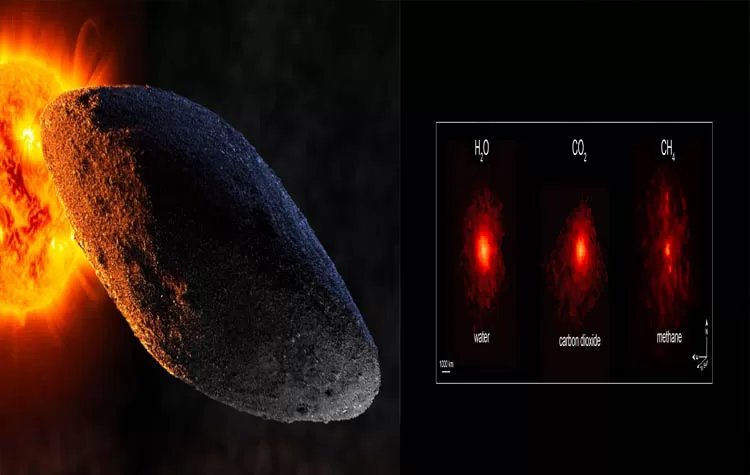
Researchers say they’ve hit a real discovery moment after NASA’s James Webb Space Telescope, or JWST, picked up methane that was hiding deep inside the interstellar comet 3I/ATLAS . What they’re seeing is giving astronomers a first look at the chemical makeup of something that clearly came from far outside our Solar System, like truly far.
This comet, called 3I/ATLAS, is currently only the third confirmed interstellar object ever seen passing through our Solar System. Most comets people talk about usually formed around the Sun. But this one looks more like a wanderer that started near a distant star, then later crossed the galaxy with no real reason to come here, at least not for us.
James Webb spots methane, direct and for the first time in a visitor like this
- With its strong infrared instruments, James Webb directly observed methane gas coming out of the comet. It’s being treated as the first direct methane detection in any interstellar object, so for planetary science and general astronomy this is a big deal.
- The working idea is that the methane stayed locked under the comet’s surface for billions of years. Then when 3I/ATLAS got closer to the Sun, the extra warmth pushed deeper into its icy layers. That heat made the buried methane vaporize, and once it did, it escaped into space.
Carbon dioxide seems weirdly abundant, and it’s puzzling scientists
On top of methane, scientists also report that 3I/ATLAS has unusually high carbon dioxide relative to water vapor. Their observations suggest carbon dioxide is basically leading the way in the comet’s gas output, and that sort of dominance is not something you commonly see in comets that form within our Solar System.
The weird chemical makeup kind of hints that the comet got its start in some planetary neighborhood where the surroundings were a lot different from what made Earth, and also its nearby planets. A lot of the researchers think this object probably took shape in a chiller zone that was loaded with carbon dioxide ice and similar stuff.
A Window into Alien Planetary Systems
- Astronomers like to treat interstellar objects, such as 3I/ATLAS, as natural time capsules ,because they bring material from far away star systems. When scientists examine what these bodies are made of ,it becomes easier to piece together how planets and comets form across the Milky Way.
- Finding methane, carbon dioxide, water ice, and other volatile compounds is giving teams a way to rebuild the conditions that existed back in the comet’s original home system, long ago, billions of years earlier. And honestly, these results could nudge or even reshape the current ideas about how planetary systems assemble, plus how organic materials are spread around the universe.
Why This Discovery Matters
The James Webb Space Telescope is still changing the way people look at deep space ,by showing details that used to be basically out of reach. The newest look at 3I/ATLAS shows how powerful space observatories can pry open secrets from objects that never really belonged to our Solar System, and instead arrived from beyond it. In that sense it offers useful clues about how varied those worlds really can be, out across the galaxy.
As 3I/ATLAS keeps moving away from the Sun ,scientists will carry on digging through the data gathered by Webb along with other observatories. Their goal is to get even more information about this rare interstellar traveler, and about the distant star system from which it emerged.
Tags Cloud