
AI-Assisted Legal Case Results In Ruling Against Meta And Google
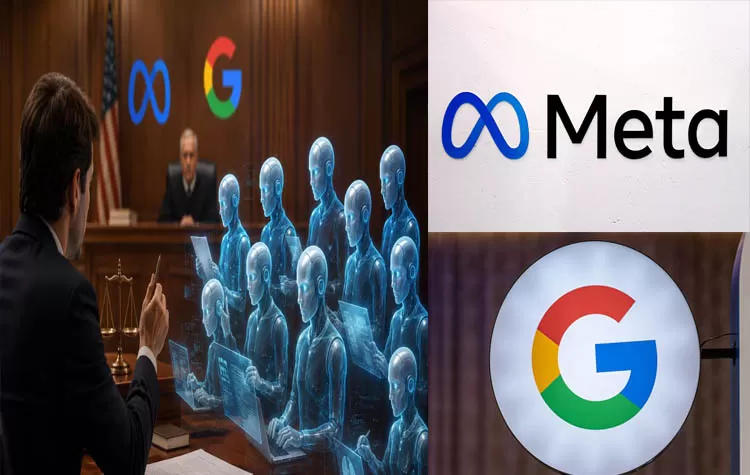
A more recent court case in the United States got attention for two reasons, kind of. First it involved arguments that social media platforms helped fuel a young woman’s addiction. Second, the plaintiff’s lawyer reportedly used artificial intelligence to get ready the case against Meta and Google.
Overall, the case points to how much AI is starting to show up in legal work and also the persistent worries about what social media does to younger users.
A Lawsuit Centered on social media
The lawsuit was filed for a 20-year-old woman who said social media platforms affected her early life and her well-being. In her account, she started using YouTube and Facebook when she was eight years old.
She claimed that specific platform features, like endless feeds and prompts, pushed people toward nonstop use and made it harder to stop scrolling or disengage. Her legal team said those design choices, were basically part of the reason addictive patterns formed.
How AI Helped the Legal Team Prepare
- Attorney Mark Lanier said that artificial intelligence really mattered in getting the case organized. Before he ever appeared in court, he used an AI tool called BoodleBox, which offers access to a handful of AI models including ChatGPT, Claude, and Gemini.
- Lanier said he leaned on it to prepare for the cross-examination of Meta CEO Mark Zuckerberg. In his view, the AI tools made it easier to review information and arrange the material more quickly than traditional approaches by themselves.
The Reported Benefits of AI in Legal Research
Lanier described AI as a strong research assistant, almost like a steady helper. He said it let him look through thousands of court decisions in a short span of time.
According to him , using AI felt kinda like having extra staff around the clock , not exactly “ remote ” but still always there. It boosted speed and output , especially when it came to case prep , like quicker groundwork and smoother drafts. Still , he also said the tech can end up being pretty expensive to use , like more than people expect , y’know.
Claims About Platform Design Features
The plaintiff argued that some platform features were put in place so people stay around for longer stretches. One example was “infinite scroll,” it just keeps loading fresh content as users move along their feeds , kind of luring them onward.
Her legal team said these kinds of design nudges can push users toward prolonged use , especially younger users. They also claimed that a bunch of other folks have run into comparable issues with social media platforms , so it wasnt just this one incident.
Court Findings and Responsibility
The court reviewed the arguments about the possible risks linked to social media use. As it was reported , the court found that Meta and Google were aware of concerns connected to their platforms , not like they were clueless.
In the ruling, the court said the companies didn’t take enough steps to handle those risks. That finding ended up being pretty central for figuring out who was responsible here , and where accountability sat.
Compensation Awarded to the Plaintiff
- The court ordered compensation that adds up to $6 million for the plaintiff.
- Under the ruling, Meta was told to cover 70 percent of the total. The remaining portion was assigned to YouTube , which is part of Google.
- The final decision was a pretty big outcome in a case touching on social media addiction and platform design choices , not small at all.
What the Case Suggests About AI in the Legal Profession
The case demonstrates how AI is becoming part of modern legal practice. Lawyers can use these tools to analyze large amounts of information, identify relevant materials, and prepare arguments more efficiently.
At the same time, the technology does not replace legal expertise. Attorneys must still evaluate information, develop legal strategies, and present their cases in court. As AI tools continue to evolve, their role in legal research and case preparation may expand further.
Tags Cloud