
China Dam Crisis Explained: How Nepal Floods Triggered Fresh Fears Along The Tibet Border
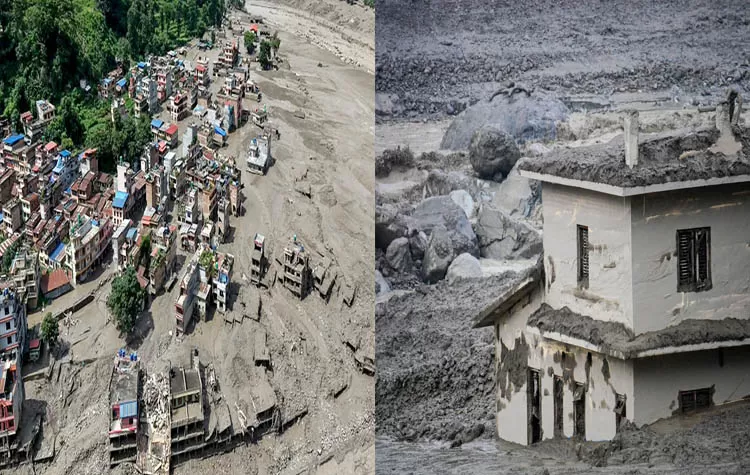
Nepal Floods Spark New Debate Over China’s Dams
- A devastating flood in the Himalayas has triggered renewed concerns about the giant dams built by China in the region.
- Massive devastation in the border area between Nepal and Tibet occurred on August 26 as a result of an ice and rock slide in the mountains.
- Meltwater, rock and debris raged down the rivers of Tibet and Nepal, submerging homes and infrastructure, cutting off power supplies and border posts, and leaving hundreds of people dead or missing.
- This catastrophe has also refueled doubts about the engineering works of the People’s Republic of China in Tibet, where glaciers are disintegrating and the mountainous terrain is unstable.
- But, while significant, this event is in no way an example of a concrete dam disaster.
What Happened in Nepal?
According to various foreign news outlets, the initial cause of the tragedy was a natural disaster in the Himalayas. On August 26, rocks and ice from a glacier broke off and blocked a river.
The resulting flow of water, ice, rock and silt rushed down the river at high speed and changed the course of the rivers.
The disaster in Nepal was caused by the sudden rise in the level of the Trishuli and Bhotekoshi rivers. The torrent of water and debris swept away everything in its path, including homes, cars, bridges, the border checkpoint and power lines.
Was a Chinese Dam at Fault?
- One of the most burning questions is whether a Chinese dam was the cause of the disaster.
- In this regard, it is necessary to clarify that geological structures do not refer to engineering structures.
- An avalanche or a slide could have blocked a river with a natural dam of rocks, ice, or a combination of both.
- It should also be noted that China categorically denies the claim that the disaster was caused by the failure of a Chinese dam. They also strongly oppose the statement that they did not warn Nepal about the dangers of the dam.
- At the moment, there is no reliable information about the failure of a concrete structure of the dam. Thus, the reasons for the flood can be sought in the dynamics of the glacier and the rockfall.
A Natural Hazard Has Also Occurred in the Himalayas
Meanwhile, a serious complication has arisen, due to which the rescue services are now facing new challenges.
The outburst flood formed a natural dam in the river behind the border. Water has accumulated behind the barrier, forming a natural hazard.
According to China, the volume of water in the dam is substantial, and there is a risk of a flood in Nepal when the obstacle is destroyed.
In addition, about several million cubic meters of water could be added to the dam, which will increase the risk of it breaking.
Why Is This Natural Dam So Dangerous?
A natural dam is a natural obstacle that can form in a river after a rockfall or landslide. Such a dam differs from an artificial one in that it consists of a mixture of ice, rocks, and sediment.
For reference, it should be said that the stability of such a structure is much lower than that of a concrete one. Therefore, a hazard of this type is particularly dangerous for the surrounding villages and towns.
The fact that the dam can be destroyed and the water behind it can simply pour down is fraught with the fact that the resulting flood can be significantly stronger than the one that occurred in Nepal.
For this reason, the authorities of both countries are closely monitoring the situation with the lake behind the natural dam.
Nepal-China Border Infrastructure Was Severely Destroyed
The flood in the border region between Tibet and Nepal has caused tremendous damage in both countries. The damage includes roads, bridges, houses, hydropower stations and border infrastructure. The Gyirong border area in Tibet was affected by the disaster.
Nepal’s Rasuwa district bore the brunt of the disaster by having several of its villages flooded. Besides, the mountainous terrain of Nepal has a number of hydropower plants built on it. Consequently, there is a high risk of dangerous consequences for electricity production infrastructure.
Why Hydropower Plants in Nepal Are Under Threat?
The topographical location of Nepal has long been favorable for the development of hydropower. Nepal possesses vast reserves of potential energy.
But at the same time, constructing power plants in the mountains is fraught with difficulties, due to the unstable and changeable nature of the Himalayas.
Various elements of the topography, such as valleys, peaks, rivers, ravines, and gorges are considered to be risky for the construction of any structures.
Hydropower stations, transmission towers, tunnels, and roads are threatened by:
- flash floods
- landslides
- glacier avalanches
- glacial lake outbreaks
- earthquakes
- heavy rains
- rapid rise of rivers
Moreover, there were reports that several hydropower plants were damaged as a result of the disaster. In addition, it is reported that rescue workers had to evacuate a group of workers and engineers trapped inside a hydropower tunnel.
Why Are Scientists Talking About Climate Change?
The fact that the danger was provoked by a rockfall and glacier is not an exception. At present, there are many reports about the fact that climate change has led to the destabilization of the Himalayan ecosystem.
The rapid increase in temperatures leads to the thawing of mountainous rivers, the destruction of permafrost and, as a result, to rockfalls. The disaster in Nepal is also associated with climate change and has drawn attention to it.
However, in this case, as mentioned earlier, global warming cannot be considered the sole cause of the disaster. At the same time, it is a factor that contributes to the instability of the area.
China’s Giant Dam Projects and Their Relevance
China is building huge dams throughout the Himalayas. The main reason for this is the location of these structures within the Tibetan Plateau. It is the source of several major rivers.
At the same time, there is an acute debate in the scientific and political communities about the impact of such projects. For example, the impact of the dam on the flow of water, its quality and salinity, as well as issues of flood control and protection against disasters.
The discussion of this problem is complicated by the very nature of the terrain and the fragile state of the environment. It is no wonder that this problem is especially relevant in light of the recent disaster in Nepal.
At the moment, the flood in Nepal demonstrates once again why the Himalayas are a dangerous region for large-scale engineering works of this kind. But so far, the data do not indicate a scenario in which the disaster was caused by a concrete Chinese dam.
Warnings About Downstream Residents Did Not Come in Time
One of the most controversial issues in the context of this disaster is the timeliness of warnings. Some sources suggest that perhaps the situation could have been averted if residents downstream knew about it in advance.
China has strongly denied accusations that it deliberately withheld information about the flood in Nepal.
Meanwhile, the controversy over the lack of timely warning has prompted questions about information security and the need for early warning systems in the Himalayan region.
New Flood Threat Has Emerged After the Disaster
Meanwhile, the threat of a flood has not disappeared. On August 28, it was reported that the lake behind the natural dam in the border area between China and Nepal began to overflow.
This prompted local authorities to close roads to accelerate rescue operations. Moreover, Chinese authorities are studying this situation and are looking for ways to reduce pressure on the dam.
This creates difficult conditions for the rescuers, since they must strike a balance between saving those who can still be saved and not putting themselves at risk.
Tags Cloud