
Elon Musk Reacts To ‘Nazi’ Label Debate: Says Misuse Disrespects Those Who Suffered Under Nazi Rule
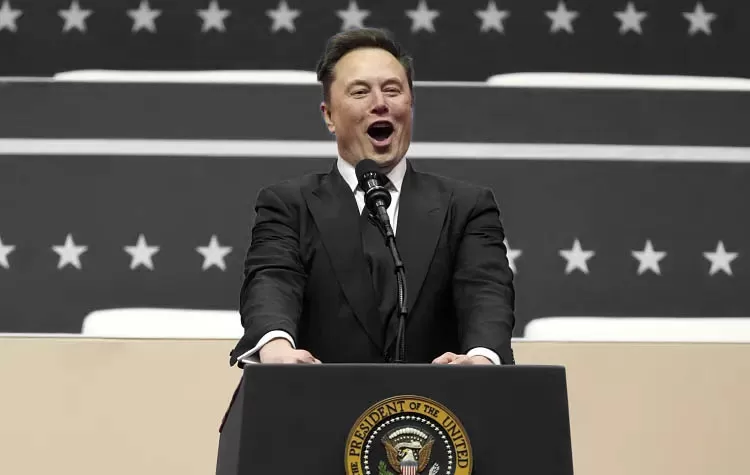
Elon Musk has reignited debate on social media after responding to an X post on the rise of the word “Nazi” in political arguments. The billionaire entrepreneur said that throwing around the term for people with differing political opinions diminished its historical meaning and disrespected those who suffered and died under the Nazi regime.
Musk responded to a post made by an X user known as Captain Eli, who said that the word “Nazi” is increasingly being used as a label for political opponents, rather than specifically referring to the historical Nazi regime.
Elon Musk speaks out on the use of ‘Nazi’
The discussion started after Captain Eli posted about being called a Nazi because of political positions. The post questioned if a word had been overused in modern political arguments, especially when there were disagreements over issues such as immigration, political ideology and views on biological sex.
Musk agreed with the overall argument, saying that calling someone a Nazi simply because of centrist or differing political views was an insult to those who actually suffered and died under the Nazi regime.
He also argued that those who deliberately misused the term should themselves face condemnation.
Why Musk’s comment is attracting attention
Elon Musk’s comments have quickly gained attention as the word “Nazi” has an especially serious historical significance. The Nazi regime in Germany was responsible for World War II atrocities and the systematic persecution and mass murder of millions of people, including approximately six million Jews during the Holocaust.
Musk’s comment has thus rekindled a bigger discussion about political language on social media, and whether historically significant terms are being misused in modern political arguments.
Supporters of Musk’s argument say that political disagreements should not automatically be compared with Nazism, because doing so diminishes its meaning.
Critics, however, have long argued that comparisons with fascism or Nazism can sometimes be relevant when discussing authoritarian political movements or extremist behaviour. The discussion reflects a bigger disagreement over how historically significant language should be used in contemporary politics.
Debate continues on X
The discussion has generated even more discussion on X, where political discussions often become especially polarized.
Musk has been involved in a number of controversies regarding political speech and moderation on social media. His latest comments add yet another chapter to the discussion about political labels and the role of social platforms in shaping public discourse.
The episode also shows how quickly comments from high-profile figures can become viral topics for discussion on X, especially when they involve politics, free speech and controversial historical references.
What Elon Musk’s statement means
At the core of Musk’s argument is the idea that historically specific words should retain their original meaning. His comments suggest that continuously using the term “Nazi” as a general insult would make it more difficult to distinguish between ordinary political disagreements and actual historical examples of Nazi ideology and atrocities.
Whether or not users agree with Musk, his comments have once again placed him right back in the center of a big social media discussion.
As political disagreements increasingly move to the online world, the question of how historically significant words should be used, and where the line between criticism and political labels should be, is likely to remain quite controversial.
Tags Cloud