
Google Plans To Send AI Data Center Technology Into Space: Project Suncatcher Explained
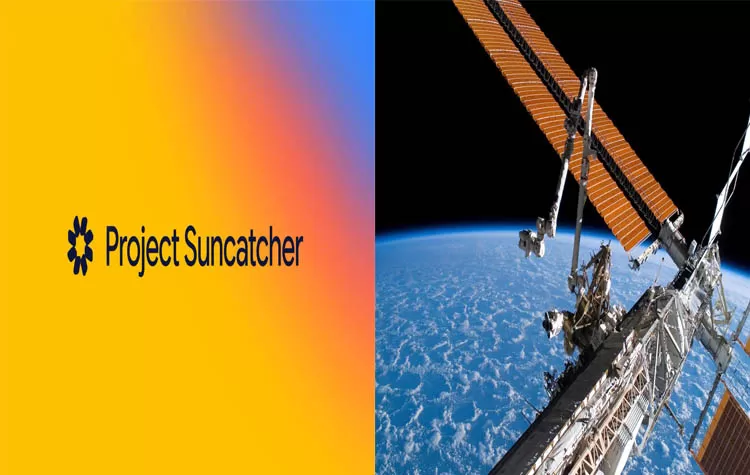
Google is getting closer to becoming one step closer to its ambitious vision of space-borne data centers. Google is set to send a prototype satellite housing its Tensor Processing Units (TPUs) into low Earth orbit to test the technology.
The upcoming mission is set to understand if Google’s chips could survive the harsh conditions of space including radiation exposure, thermal shifts and the intense forces applied during a rocket launch. The satellite is expected to travel SpaceX’s Transporter-18 rideshare mission in a partnership made with satellite firm Planet.
What is Google’s Project Suncatcher?
Google’s Project Suncatcher is its long-term research project examining the feasibility of building AI computing infrastructure in space. Google announced the project in November 2025 which outlined a prospective network of solar-powered satellites with TPU chips connected through high-speed communication systems.
The concept is based on the idea that satellites in low Earth orbit could be exposed to sunlight for far more extended periods compared to solar installations on Earth and produce significantly more solar energy. Google estimates that particular orbital configurations could generate up to eight times greater solar energy than equivalent Earth installations.
Google to Test AI Chips in Orbit
- Google’s first mission is not set to become a full-fledged space-based commercial data center but is instead an experimental mission to collect real-world data.
- The prototype satellite will include Google’s TPU hardware to test the performance of its chips while being subjected to the physical conditions of orbital space. Ground testing has been conducted to assess the chips’ performance under radiation exposure and other stressors but Google states that orbital testing is necessary to understand the hardware’s behavior in space.
- Google’s current plan is to have the prototype launched on October 1, 2026 via SpaceX’s Transporter-18 rideshare mission, according to recent reports.
Why Put Data Centers in Space?
The exploding demand for generative AI is fueling a growing appetite for computing power and electricity which Google’s Project Suncatcher considers exploring an option to move some of these computing demands off terrestrial ground into orbit.
Solar-powered satellites could provide a continuous source of energy for a computer system while avoiding the electricity and land intensities which massive data center installations would normally require on Earth. However, the concept remains a research-level idea at this point and is not yet an established commercial solution.
Cooling AI Chips in Space Is a Huge Challenge
- One of the major engineering challenges posed by the concept is ensuring the heat generated by these onboard processors is dissipated into space.
- Data centers on Earth make use of airflow to cool processors but a vacuum prevents air from flowing in space. Google is considering a combination approach of heat pipes and radiators to carry away the heat from the TPU chips and then expel it into space. The company has been testing this technology in thermal-vacuum environments prior to testing it in orbit.
- Reports on the first prototype indicate that the experimental system would allow for limited operation of the AI hardware before the need to dissipate heat becomes necessary.
Radiation and Launch Forces Pose Another Risk
Space radiation could cause issues with the onboard electronics in terms of disrupting processing and potentially causing bit flips that could interrupt AI calculations. Google has already tested its Trillium TPUs at the University of California, Davis while running AI workloads in the presence of radiation.
The hardware must survive the intense forces of vibration and acceleration as well during launch. Google has been subjected its hardware to vast testing in vibration environments to simulate what it will encounter during its journey into orbit.
Google Plans More Space AI Tests
The first mission is only an initial experiment and Google has plans for more tests, including a two-satellite mission in 2027 to investigate the high-bandwidth laser communication systems needed for future orbital computing clusters.
Future versions of the concept would entail a set of satellites, each housing AI processors, communicating with each other via optical links. Such a system would require a vast amount of innovation and investment in thermal management, satellite networking, radiation shielding, launch economics and more areas.
Tags Cloud