
Trump Shares New Strait Of Hormuz Map After Rejecting Iran’s 7-Day Ceasefire Proposal
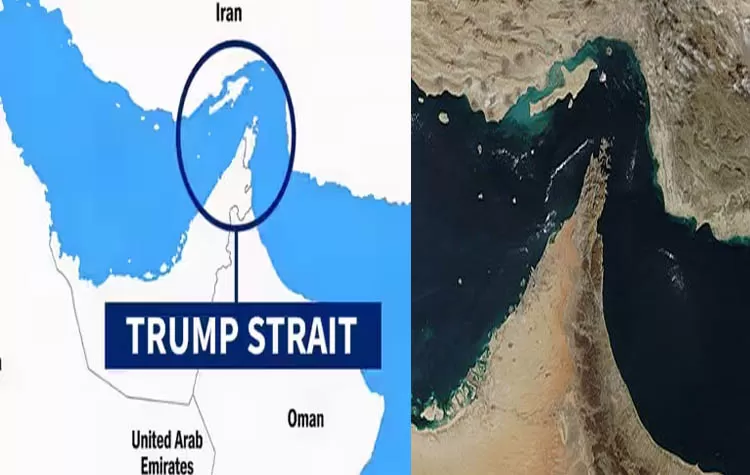
US President Donald Trump has focused on the strategically important Strait of Hormuz after Iran presented a seven-day plan to deescalate tensions and reopen the waterway.
Iran’s foreign minister Abbas Araghchi stated that Iran proposed a plan that would allow the Strait to resume its normal operations within 7 days. This would be possible if Washington lifts the naval blockade of Iranian ports, eases sanctions against Iran’s oil exports, and declares a ceasefire in the region, according to the sources. It should also be noted that Iran made the offer through Qatari mediators.
Iran’s Seven-day Hormuz Plan
According to Araghchi, Iran’s proposal would require several days for the initial steps. Then, on the sixth day, the Strait of Hormuz would open for traffic. Subsequently, on the seventh day, the representatives of the US and Iran would discuss the terms of a broader strategic agreement, including Iran’s nuclear program.
The plan is part of efforts to re-establish diplomatic relations between Washington and Tehran, which had been stalled after the collapse of the previous agreement. In particular, recently, Trump has taken a more uncompromising stance towards Iran.
Trump’s Pressure on Iran
As reported by Reuters, recently, Trump has demanded accelerated economic pressure on Iran and has shown no interest in resuming negotiations. At the same time, the situation in the Persian Gulf and the status of the Strait of Hormuz are once again at the center of the strategic confrontation between Washington and Tehran.
Trump has previously presented a map of the Strait of Hormuz, on which he marked this waterway as “NEW U.S. Territory.” Recently, according to reports, he has once again expressed his views on this issue. In particular, Trump highlighted certain areas on the map, including land plots along the Strait, which belong to Iran, Oman, and the UAE.
Why Strait of Hormuz is so important?
The Strait of Hormuz connects the Persian Gulf with the Gulf of Oman. It is through this water route that about a fifth of the world’s traded natural gas and oil pass. Therefore, the closure of the Strait of Hormuz leads to disruptions in the global supply of hydrocarbons and transnational transport operations.
This is why Iran’s willingness to associate the lifting of sanctions with the unblocking of the Strait of Hormuz has led to its increased centrality in the diplomatic negotiations between Tehran and Washington. According to Reuters, an Iranian official stated that they could open the Strait of Hormuz for traffic in 7 days if the US eased up military pressure on Iran.
US-Iran Relations: Deadlock or Diplomacy?
It is against this background that Iran’s latest proposal for a seven-day plan to deescalate tensions with the US and reopen the Strait of Hormuz. The offer came as both countries seem to be under pressure to find a way out of the confrontation. In particular, Iranians have demonstrated their readiness to use mediators such as Qatar to deliver the message to Washington. According to reports, Iran’s special envoy to the UN has stated that Tehran hopes to use the UN General Assembly to resume negotiations with the US via mediators.
Meanwhile, the Trump administration has so far focused on tightening the economic and military pressure on Iran. Reuters reports that Trump stated that he expects a deal to be reached after the midterm elections, while Senator Marco Rubio pointed out that Washington was ready to negotiate with Iran if it could achieve a concrete result. So far, it is unclear how the Trump administration will respond to Iran’s seven-day plan. However, the response to this proposal will be key to further diplomatic negotiations between the two countries. At the moment, the situation with the Strait of Hormuz is one of the most critical confrontations between Iran and the US.
Tags Cloud