
Elon Musk’s SpaceX AI Data Centre Plans Raise Concerns Among Lenders Over Nvidia Chips
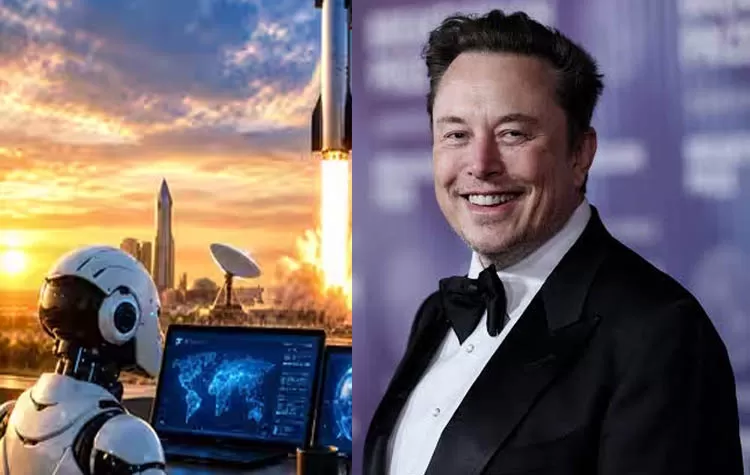
Concerns have been raised by financial institutions backing Elon Musk’s space venture, SpaceX, over the risk of valuable Nvidia AI chips being put in space, and potentially becoming hard to retrieve in the event of financial issues at the business.
Concerns around AI in space
- Concerns have been raised by investors funding AI infrastructure at SpaceX.
- Investors want to ensure that the Nvidia chips used as collateral for the loans are not sent to outer space.
- Lenders want the chips to be on Earth so they can be reclaimed if SpaceX falls behind on repayments.
- Placing expensive AI chips in satellites means it may be very challenging to reclaim the assets. Reclaiming assets in space will be far more difficult compared to reclaiming assets in normal data centres.
- It is unclear if these restrictions will form part of the final deals.
Billion-dollar Chip Financing Deal at SpaceX
SpaceX has secured a large amount of funding for expanding its AI computing capabilities in a deal known as Project Saturn.
Nvidia’s advanced Vera Rubin NVL72 computers are being used in the deal, allowing high performance AI processing.
The deal received high interest from investors, and has raised $44bn in debt and notes.
This demonstrates just how much money businesses are investing in AI infrastructure, as businesses around the world are competing to create more powerful AI systems.
Elon Musk’s AI in space
Elon Musk has proposed creating a network of solar powered satellites with advanced AI processors. This could allow AI processing in space.
Using solar power means there is no reliance on data centres on Earth.
Additionally, SpaceX has looked at using its fully reusable Starship rocket to reduce costs of bringing large amounts of computing equipment into space.
In January, SpaceX applied to the US Federal Communications Commission to be allowed to send up to 1 million satellites into space for its AI in space network.
Challenges in space computing
- Despite benefits, there are many challenges to creating AI data centres in space.
- A large issue is temperature control. As satellites are in space, they cannot transfer heat in the same way as data centres on Earth, as there is no air.
- Therefore, special cooling systems and radiators would be required to stop powerful AI chips from overheating in space.
- Other challenges include costs of sending equipment to space, maintaining satellites, exposure to radiation, replacing hardware and the cost of large computing networks in space.
- This may affect how quickly AI infrastructure in space becomes viable.
Google is also researching AI in space
- SpaceX is not the only tech company researching computing in space.
- Google has developed a project called Project Suncatcher, using solar powered satellites with its specialised TPUs.
- The company has been experimenting with AI computing in space, looking at how a network of connected satellites can be used for complex computing tasks.
- Google has also demonstrated AI in space using its Gemma model. The AI was able to generate a haiku from within the satellite.
- This suggests that many major tech companies are interested in using space as a platform for AI in the future.
Tags Cloud