
IBM Ends H-1B Visa And Green Card Sponsorship For Most Consulting Roles: Employees May Have To Relocate Or Leave By 2026
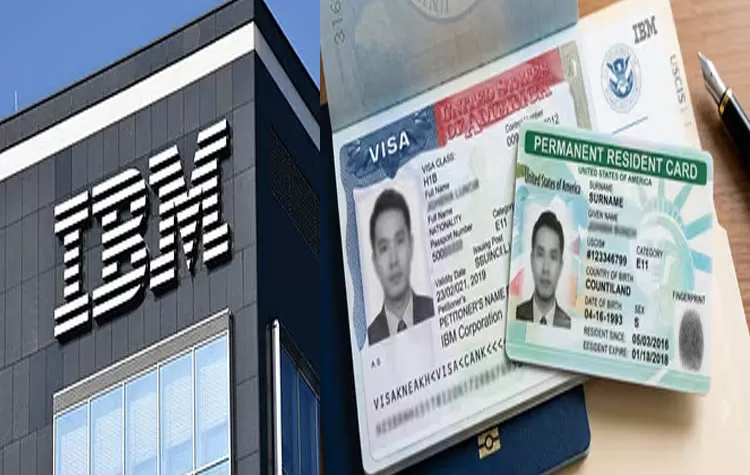
International Business Machines is to stop supporting staff working in the majority of its IBM Consulting business to obtain H-1B and green cards. This may impact on non-US nationals working for IBM, such as Indian Information Technology professionals.
Staff may either be relocated or choose to depart IBM by the end of 2026.
IBM Stops Supporting Staff to Obtain H-1B and Green Cards
- IBM is ceasing to support staff within its biggest business unit – IBM Consulting, which has over 150,000 staff globally – to obtain immigration status in the US.
- It has been assessing its involvement in US ‘skilled’ immigration schemes for a number of years. IBM said that evolving labour market conditions and client needs had contributed to its decision to stop supporting staff in the majority of consulting roles to obtain immigration status.
- This could have an impact on those working in the US who rely on sponsored H-1Bs or employment green cards to both work and advance their careers.
Staff May Be Relocated or Must Depart IBM
Staff impacted by the above may be relocated by IBM to non-US based jobs. If they cannot be relocated or re-employed then they may need to depart IBM.
It appears that staff were provided with a short timescale in which to determine if they wished to be relocated. Those who do not wish to remain with IBM may be eligible for outplacement support in line with company policy.
There are concerns amongst overseas technology professionals, many of whom have worked in the US for a number of years, about the impact that this news may have on their application for permanent settlement.
Why is IBM Stopping Supporting Staff to Obtain Immigration Status?
- IBM’s announcement occurs against a backdrop of heightened awareness regarding the employment of overseas staff and employment immigration in the US.
- Whilst IBM recognised that it had been reducing its reliance on skilled immigration status in recent years, it also noted that its present staffing and client needs had changed and therefore there was less need to support staff in many of its consulting roles to obtain immigration status.
- Furthermore, IBM’s consulting business has reportedly not performed as robustly in terms of growth as its software business.
Uncertainty Arises for Indian IT Professionals under US H-1B Visa Regime
The US technology sector has historically used H-1B visas to employ skilled staff from countries including India.
But recent immigration reforms and heightened awareness of sponsored immigration status have now introduced a level of uncertainty for both overseas staff and for technology businesses.
Indian professionals are especially affected by this as there is often considerable delay in obtaining green cards through the employment route. Alterations to immigration support may therefore affect not only their professional aspirations but also personal life choices and applications for permanent settlement.
What Impact Does IBM’s Decision Have for Indian Staff?
IBM’s choice not to support staff in the majority of its consulting business to obtain immigration status in the US may have various consequences for Indian staff within this area.
Staff may need to emigrate, seek employment with a new employer prepared to sponsor their immigration status or investigate different immigration routes.
It also emphasises the value of being knowledgeable about US work visa regimes and of having adaptable professional careers, especially given the current climate of uncertainty regarding immigration issues.
Those impacted by IBM’s immigration policy should discuss their situation with suitably qualified immigration advisers and evaluate their work and immigration status.
Tags Cloud