
Trump Administration Signals Major Action On US Work Visas; H-1B Workers Face Increased Scrutiny
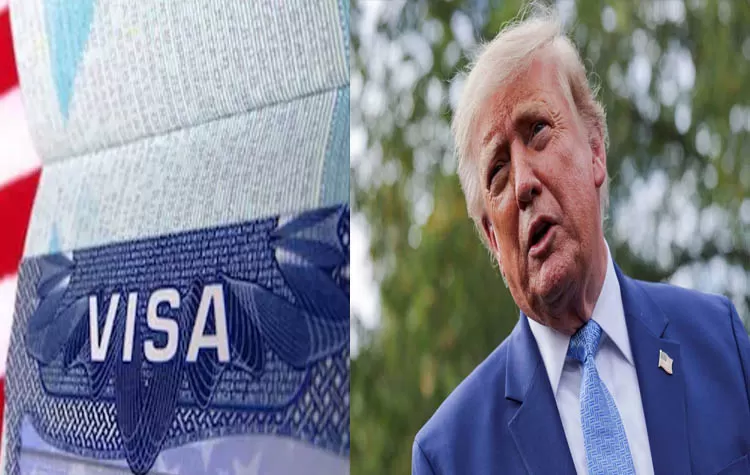
The Donald Trump administration appears to be circling the drain with regard to foreign-worker visa programs in the U.S. as officials are suggesting significant action on curbing visa fraud and misusing immigration programs to exploit the domestic labor market.
U.S. Department of Labor Inspector General Anthony D’Esposito has warned that it could be a busy week for visa enforcement as federal authorities are ramping up investigations into firms and businesses accused of exploiting employment visa programs.
H-1B Visa Programme Under Review
The H-1B visa program which allows American firms to employ foreign workers on a temporary basis in specialty occupations, including information technology, engineering, health, and research is under the biggest pressure.
An executive order dated September 18 directed the Secretary of Labor, the Secretary of Homeland Security, and the Secretary of State to establish policies and procedures to ensure enhanced scrutiny of H-1B petitions and other immigration-related visa applications.
Moreover, the authorities have been asked to determine whether there has been a layoff of U.S. workers in similar occupational specialties and to take appropriate action.
The order additionally requires that all applications for H-1B visas to the Labor Department be reviewed for possible enforcement responses based on evidence contained in certified labor condition applications submitted by firms seeking to hire foreign workers.
Tightening Screws on Immigration Fraud
The latest crackdown is part of a larger federal probe into alleged visa fraud, including worker exploitation and misusing of America’s immigration systems.
Federal authorities have already issued subpoenas and executed search warrants in several cases across the country. In some instances, visa applications of firms under investigation have been placed on hold while authorities investigate allegations.
The U.S. government has argued that the H-1B program should be utilized to hire “high-skilled” workers and not as a means to circumvent America’s labor laws by replacing U.S. employees with less qualified and lower-paid foreigners.
$100,000 ‘Per Employee’ H-1B Fee Faces Legal Challenges
Meanwhile, another key policy change which has triggered legal battles and which has threatened to inflict hardship on millions of immigrants is the Trump administration’s highly controversial decision to levy a $100,000 “per employee” fee for new H-1B visas.
The administration’s directive to impose the controversial fee was extended through September 21, 2027. However, the latest move to enforce the unpopular policy has been thwarted after a federal judge in October 2026 declined to lift the injunction on the $100,000 “per employee” H-1B fee.
Indian Tech Workers Are Particularly Affected
The situation with H-1B visas has far-reaching implications for Indian professionals, including software workers due to their larger presence in the U.S. as H-1B visa holders and as a result of their companies’ (in India) greater reliance on this particular category of employment visas.
It should also be noted that H-1B visas for Indian IT companies have declined considerably in recent years. Experts believe that the U.S.-based Indian IT firms are witnessing a paradigm shift wherein they are opting for local hiring and offshore outsourcing instead of relying on H-1B visas.
60-Day Grace Period for Laid Off Temporary Workers Also at Risk
The Trump administration has proposed a measure which would remove a 60-day “grace period” for H-1B visa holders who have lost their jobs.
The 60-day period which allowed such visa holders to stay in the U.S. while they searched for a new employer sponsoring them was set to expire on October 1, 2026. Analysts note that if the “grace period” was rescinded, it would create additional difficulties for laid-off H-1B holders.
Tougher Screening and Vetting Procedures
Additionally, the U.S. government has announced stricter visa screening and vetting procedures starting from October 1, 2026.
According to the new directives, additional background checks including extensive online presence analyses will be conducted for visa applicants starting from October 1, 2026. Moreover, social media screening is already in place for certain categories of visa holders including H-1B and H-4.
In general, the developments suggest that the Trump administration’s policy towards employment-based immigration is becoming increasingly strict as it is targeting not only visa fraud but also tightening visa screening and tightening rules for temporary workers. For Indian students and skilled workers, including IT professionals, these are worrying times as they consider career opportunities in the U.S. Employers and potential visa applicants will be watching the developments with great interest over the next few weeks.
Tags Cloud