
Elon Musk Unveils Flying Tesla Roadster: SpaceX Technology Makes Headlines
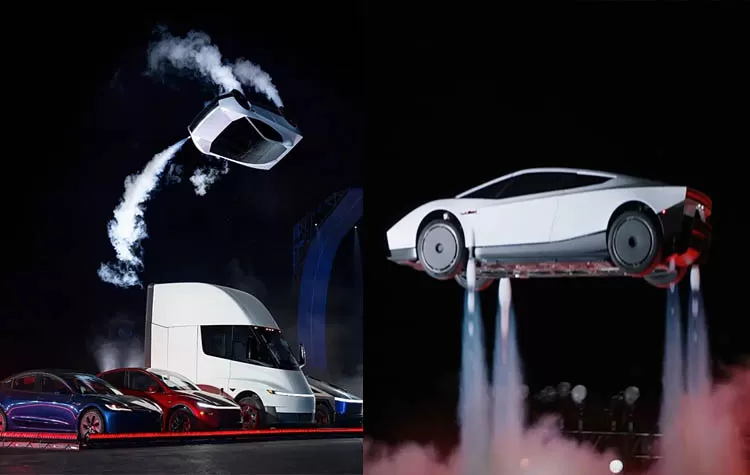
Elon Musk Unveils Flying Tesla Roadster, SpaceX Tech Making Rounds
CEO of Tesla Elon Musk has unveiled a redesigned version of the much-anticipated Tesla Roadster, which stunned onlookers by performing unusual aerial manoeuvres. The electric sports car drove upside down on a curved ramp, then launched and landed safely back on the ground during a demonstration at a SpaceX facility in Texas on October 15, 2026.
The demonstration has reignited the intrigue surrounding flying cars, electric car innovation and the future of transportation. Musk posted video of the demonstration on X, suggesting that flying cars could be part of the future. But the showcased technology is largely experimental, and it is still unclear how fit this technology will be for regular road usage.
How does the flying Tesla Roadster work?
The next generation Tesla Roadster is a product of technology powered by SpaceX, Elon Musk's company. This experimental electric car uses thrusters using pressurised gas to create thrust and perform the aerial feats.
The demonstration showcased the car's ability to fly beyond a regular electric sports car. The technology has piqued the curiosity of many, as it combines Tesla's electric vehicle technology with aerospace technologies.
But the demonstration does not suggest that the vehicle can be used like a plane or as a regular-flying taxi. A lot of questions about its practical application, safety and legal requirements still remain.
Tesla Roadster: what's new?
The redesigned Tesla Roadster promises to be a high-performance electric sports car, with technology that has been showcased as a part of a SpaceX-inspired experiment.
Key features include:
- Electric sports car : A next-level Roadster is designed to be a high-performance electric sports car
- SpaceX-inspired thrusters : The car is outfitted with propulsion technology and thrusters showcased during the aerial demonstration
- Electric performance : Tesla has showcased an ambitious acceleration target of 0-60 mph in around one second
- Experimental aerial capability : The car showcased brief aerial capability during the presentation, including an aerial flip
- Futuristic engineering : A blend of electric car and aerospace technologies to develop a futuristic automobile
These are some of the features that have sparked the intrigue of electric car fans, technology enthusiasts and the curious alike. But it is yet to be seen just what the final production model will showcase, when it can be acquired and if its safety and legality will hold up.
When will the new Tesla Roadster launch?
Tesla unveiled the new Roadster in 2017, but the much-awaited project has been delayed multiple times since then. Following the demo, the company has suggested that production will begin in 2028.
The announcement has sent Tesla fans into a frenzy, as the much-awaited electric supercar continues to get closer to launch. But the final production details, cost, availability and more will be of utmost importance for those looking to purchase the car.
Is the Tesla flying car safe and legal?
While the demonstration of the Tesla Roadster's ability to fly was certainly engaging, the safety and legal requirements of such a vehicle are still up for debate.
A car that operates on the roads must meet specific safety requirements - the same would apply to any sort of airborne demonstration. In short, a controlled demonstration is not enough to suggest that a car is legal to fly.
For now, the Tesla Roadster should be seen as a high-performance experimental electric vehicle, not a commercial flying car for everyday use.
What's next for electric cars?
The new Tesla Roadster is a prime example of just how far electric car manufacturers are willing to test the limits of vehicle design and functionality. Tesla has combined electric car technology, thruster technology and aerospace engineering to push the boundaries of what a car is capable of.
But this is all still quite theoretical - the Roadster's technology will need to undergo extensive testing and safety measures to actually be put into practical use. The practical applications for such technology might still be far off in the future, but companies like Tesla continue to push the envelope when creating futuristic vehicles.
Tags Cloud