
US Tariffs On Pharmaceuticals: Impact On Indian Companies
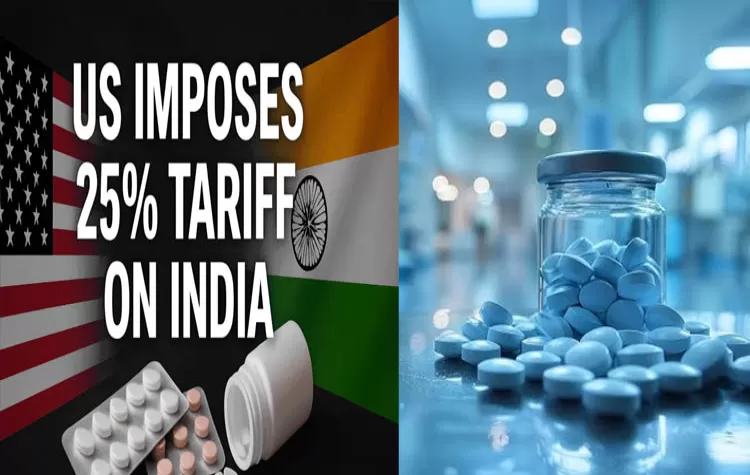
- US President Donald Trump has announced a new tariff policy on pharmaceutical imports. The policy establishes a 100% tax requirement for all patented medicines that enter the United States. He signed an executive order to implement this decision.
- The administration claimed that pharmaceutical products and raw material imports create potential threats to the country's security. The government established these tariffs as a response to these security concerns.
- Following reports about this policy, pharmaceutical stocks in India saw selling pressure in the market.
Key Details of the Executive Order
The new order defines clear conditions for companies that export medicines to the US.
- Companies with “Most Favored” agreements can avoid tariffs if they set up manufacturing units in the US.
- The companies will receive complete patent product and additional merchandise exemption.
- All patented medicines will incur a 100% import duty for companies that do not have these agreements.
The manufacturing process requires adherence to additional procedures
The US facility construction without a pricing agreement results in a 20% tax assessment for the company.
The tax will increase to 100% over a period of four years.
Some categories remain exempt for now:
- Generic medicines
- Biosimilars
- Emergency drugs
Impact on Indian Pharmaceutical Companies
The US market serves as the primary export destination for Indian pharmaceutical companies who produce generic medicines. The current product exemption results in minimal immediate effects.
Future threats will emerge.
- The US government plans to examine the operation of generic drugs.
- If the US government applies tariffs on generics, Indian businesses will suffer major financial damage.
- Dr. Reddy’s Laboratories,Sun Pharma,Biocon constitute the three Indian companies that currently function in the patented drug market.
These companies sell both generic and patented medicines in the US. As a result, they may face partial exposure to the new tariffs.
Timeline for Industry Response
The US administration has allowed time for companies to respond:
- 120 days for large pharmaceutical companies
- 180 days for smaller organizations
During this period, companies can hold discussions with the US government and adjust their strategies.
Tags Cloud