
Concerns Over India's Batting Order In Second T20 Against South Africa
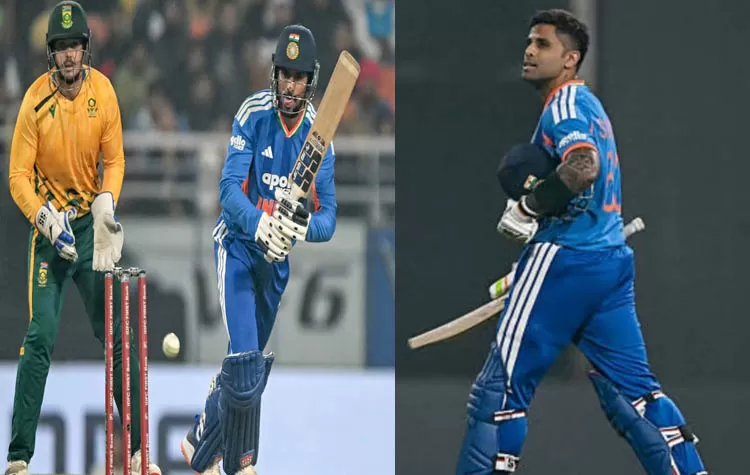
Decisions on Batsmen in the Second T20
In the second T20 match against South Africa, India had a high target to chase. The team lost the first wicket quickly. The team required a stable batsman to be sent in. Instead, the bowling all-rounder, Axar Patel, came to bat. Although he scored one run per ball, he couldn't hit massive sixes, and soon he was out.
Shivam Dube, known for his approach to negate spinners and for his mighty sixes, came in to bat at eight. India’s chance of winning by that time was very minimal. The situation illustrated how changes in the batting lineup might have negative repercussions.
Role of a Conistent Batting Order
- Having a consistent lineup is necessary irrespective of the formats, be it Test matches, ODIs, or T20s. This helps the players get accustomed to playing in a particular slot, with a consistent lineup giving the players the necessary confidence. It is a fact that a consistent lineup helps in increased success, but the interruption that has happened due to the retirement of
- Ever since Gautam Gambhir has been appointed as the coach, there have been experiments with the batting line-up. Players are not known to bat in the same order from one match to the other. For instance, Washington Sundar has been pushed up in the top order in Test matches. Although there have been experiments, these used to be situation-specific, such as Nayan Mongia opening the matches occasionally, Javagal Srinath batting as a pinch hitter, but these used to occur in non-critical matches.
Position-Specific Bat
In a 50-over match, a consistent lineup is particularly essential. Injured players should be replaced by similar players. It is not a good idea to use lower order players for a better position.
Players should play best in their respective playing positions. For instance:
- Shivam Dube is best at position number six
- Hardik Pandya performs better at number five
- Ever-changing playing positions make it difficult for the players to find a groove, resulting in a disruption in team formations
Role of Position Number Three
The number three spot is vital in every case. If wickets are fallen, it is essential for the batsman playing at number three to rotate the strike. In the second T20, India may have been hampered by the fact that Axar Patel is playing at number three. Now, the team has to take into consideration the proper playing eleven as well as the batting order for the third T20. This is essential in order to prevent a series loss.
Tags Cloud