
Trump And The Monroe Doctrine: A Policy For Regional Dominance
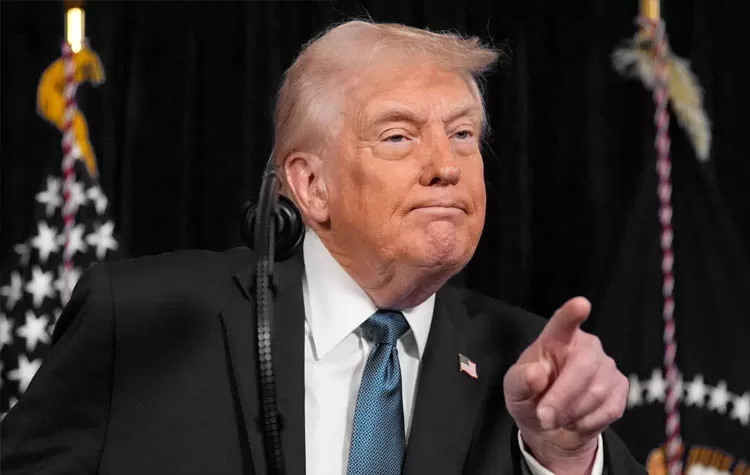
US President Donald Trump invoked the Monroe Doctrine to justify his measures against the President of Venezuela, Nicolás Maduro. This thus brought back to the surface the doctrine and its role in US foreign policy discussion. The doctrine has been actively involved in shaping American conduct in the Western Hemisphere for over two hundred years and is still a major factor in the decision-making process for the present-day policies.
Origins of the Monroe Doctrine
- The Monroe Doctrine was first proclaimed in 1823 by James Monroe, the fifth president of the United States. He made his speech to Congress wherein the doctrine was presented. The chief aim of the doctrine was precisely to cut off the Europeans from interfering through their powers in the Western Hemisphere.
- By then, most Latin American territories had recently thrown off the yoke of European colonialism. Monroe contended that European countries standing for or regaining control would thus not only impede regional but also hinder global stability. At the same time, the doctrine facilitated the US's claim of power across the continent.
Expansion Through Interpretation
- Eventually, US presidents allowed the doctrine to change forms and interpret it in such a way that it became a precursor to their intervention in other states. In the 1860s, France brought Emperor Maximilian to Mexico and made him king. When the US Civil War ended, the US demanded France to leave Mexico as power keeping the doctrine in mind.
- In 1904, President Theodore Roosevelt took the doctrine's base and added the "Roosevelt Corollary." He asserted that the US had the right to intervene in Latin American countries if they could not maintain order. Later on, the US used this rationale to back the split of Panama from Colombia. This was a maneuver that enabled the US to control the Panama Canal Zone.
Use During the Cold War
The Cold War was a period when the US applied the Monroe Doctrine as an anticommunism measure. The US in 1962 asked the Soviet Union to take away its missiles from Cuba. In the 1980s, the Reagan government challenged the Sandinista regime in Nicaragua.These moves demonstrated the changing character of the doctrine that was mainly used for US strategic and economic interests at different times.
Trump’s Interpretation
- The Monroe Doctrine was once more used under President Trump as a pretext for action in the Western Hemisphere. Trump asserted that the Maduro regime in Venezuela permitted unfriendly foreign powers to establish their presence in the area. He furthermore pointed out that the US interests were endangered by the presence of such weapons.
- The administration maintained that these changes were a direct violation of the US foreign policy that had been in place for ages. The officials claimed that the US desired the presence of friendly and stable governments in the neighboring countries. They characterized their actions as being part of the efforts to empower America.
- Some pundits have dubbed this policy the “Donroe Doctrine.” They contend that Trump’s version is solely focused on the restoration of US hegemony in the Western Hemisphere.
Tags Cloud