
US Proposes 500 Percent Tariff On Countries Buying Russian Oil
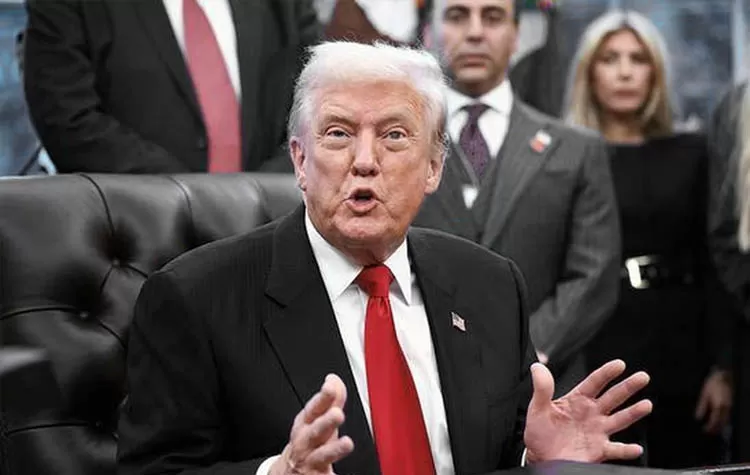
The US is ready for more strict measures against the countries still importing oil from Russia. President Trump has accepted the idea of a bill that would put a 500% tax on all those countries. If the bill gets a green light from Congress, it might have a huge impact on economies like India, China, and Brazil.
US Leadership Signals Support for New Sanctions
- US Senator Lindsey Graham has mentioned that his recent meeting with the President at the White House was constructive. He said the President has authorized to go ahead with the bill. Graham pointed out that Ukraine is ready to make significant sacrifices for peace but Russia has not budged. He said that Russia is still carrying out military operations while there are diplomatic talks going on.
- Graham further said that the bill would empower President Trump to a large extent to take actions against the countries that still buy oil from Russia. He argued that by buying oil at reduced prices, Russia earns money, which in turn is being used to finance its military operations in Ukraine. He was optimistic that the bill would garner bipartisan support and be put to vote next week.
Details of the Russia Sanctions Act of 2025
- The draft legislation put forward by Senators Lindsey Graham and Richard Blumenthal has been named the Russia Sanctions Act of 2025. The purpose of the bill is to impose further tariffs and sanctions on countries that by their actions indirectly support the Russian war. As per the terms of the draft bill, a 500% tax will be levied on the secondary purchase and resale of Russian oil.
- The senators in their joint statement talked about the situation saying that taxing the countries like India, China, and Brazil would put extra pressure on Russia. They also pointed out that cutting down the demand for Russian oil is one of the vital steps towards ending the conflict.
Impact of the Sanctions on India and the Financial Markets
President Trump has already placed a tariff of 50 percent on India for buying energy from Russia. Indian stock exchanges reacted very negatively to these news. The total amount lost in the market was about ₹8 lakh crore which is the same as the wealth of the investors.
Political Response in India
The Indian National Congress has judged the India-US relations as progressively unstable. Party's general secretary Jairam Ramesh has told that new challenges keep coming up very often. He has mentioned that relations have soured since the US has not reacted to the Indian Prime Minister's diplomatic outreach. His remarks came after the news about the proposed US tariffs.
India's Crude Oil Import Pattern
- India has become the third largest importer of crude oil in the world. It imports about 88 percent of its total oil consumption. Up till 2021, the Indian oil imports were mainly from the Middle East, Russia constituted only 0.2 percent of India's total oil imports.
- The Russia-Ukraine war that started in 2022 opened up the prospect of India taking in more Russian oil. That is because Russia was willing to sell its oil at a discounted rate. The share of Russia in India's oil imports increased rapidly and at one point it accounted for almost 40 percent.
- But after receiving a warning from the US, India started to cut the amount of Russian oil it was consuming. In November, Russian oil constituted approximately 33 percent of India's imports which dropped to below 25 percent in December. The analytics company Kpler has provided this data which states that India's oil imports have gone down from 1.84 million barrels per day in November to 1.2 million barrels per day in December.
Tags Cloud