
Social Media Ban For Children: Feasibility In India
Emerging Preoccupations with Use of Social Media
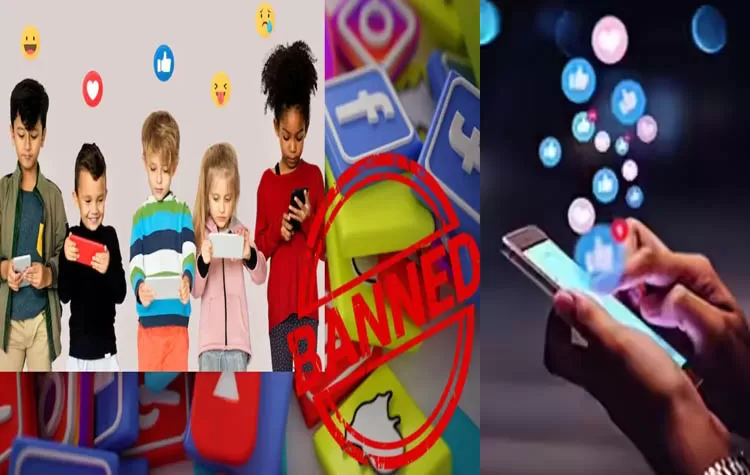
Social media is impacting children in various ways. Excessive social media usage is linked to issues of mental health and ill behavior, primarily in children. As a reaction to this challenge, the Australian government has imposed a ban on social media usage among children under 16 years old. Students are not allowed to access sites such as TikTok, Instagram, YouTube, Facebook, Reddit, and Snapchat. Australia is the first country in the world to enforce this regulation. Such a move has ignited a debate in India regarding a possible implementation of this regulation.
Public Debate in India
A major population using social media comprises children and teenagers in India. Due to this, a majority of people are demanding regulation. Among those participating in online conversations include parents, teachers, and online influencers. Actor Sonu Sood also expressed his views on banning social media among children under the age of 16 years.
Obstacles in Implementation of a Ban
Implementing
Several reasons make such a ban a challenge in India. Most children have access to social media using smartphones used by parents. Statistics show that most people, at least 80 percent, spend over three hours a day on sites such as WhatsApp, YouTube, and Instagram. In most instances, children have access to accounts owned by their parents. Therefore, this hinders the effectiveness of a regulation based on their age. While smartphones have control capabilities for parents, most children are capable of overriding these controls.
Benefits of Using Social Media
Social media can benefit children in many ways too. The main advantage is a platform where children can showcase their talents in music, dancing, artwork, and other subjects. Some children have gained a living out of these sites. Learning is available too. Students have used social media sites to acquire knowledge in coding, languages, and other subjects. The sites bring people with common interests together and allow them to share ideas.
Requirement for Harmonious Methodology
Even in these The Australian government shaped their policy according to their social framework and educational system. In India, it may not be feasible to have a unified strategy. Most schools in India rely on platforms such as YouTube for educational purposes. Children in school make usage of social media sites to grasp complicated subjects. A different strategy is advised rather than an outright prohibition. Parents must monitor their children’s social media activities and assess the effect of social media accordingly.
Tags Cloud