
The Finance Minister’s Path Of Duty
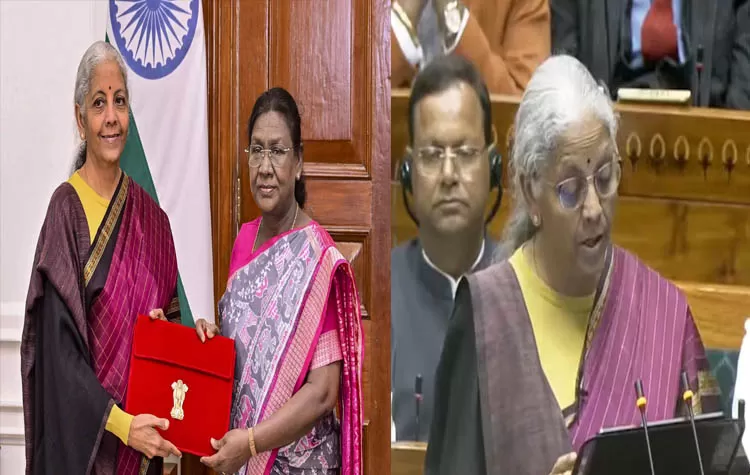
According to Union Finance Minister Nirmala Sitharaman India shows continuous economic progress which maintains a consistent trajectory of advancement. The government transforms public aspirations into practical measures which deliver development benefits to Dalit farmers and tribal people. The team at Kartavya Bhavan developed the 2026–27 Budget through their work on three essential responsibilities.
First Duty: Strengthening Economic Productivity and Stability
The first duty aims to boost productivity and competitiveness while creating sustainable economic growth amid the global economic uncertainty. The government has identified six priority areas for long-term development:
- The seven strategic sectors will achieve quicker productivity gains.
- The industrial sector will undergo restoration.
- The “Champion MSMEs” program will implement a dedicated action plan.
- The infrastructure projects will receive increased funding support.
- The country will achieve energy security and stability in the future.
- The expansion of urban economic activities will take place.
The additional proposals under this duty include the following items:
- The establishment of high-tech tool rooms will take place.
- Educational institutions should establish stronger connections with industry.
- The creation of mega textile parks will happen.
- The textile sector will receive support through a five-principle program.
- The government will allocate ₹10,000 crore for textiles over the next five years.
- Indian textile products will undergo global branding through a new initiative.
- The Bio-Pharma Power scheme will receive ₹10,000 crore funding for five years.
- Three new national institutions will establish campuses for pharmaceutical education and research.
Second Duty: Empowering People and Expanding Opportunities
The second duty exists to fulfill public expectations while enabling Indian citizens to create a prosperous nation. The Finance Minister stated that approximately 25 crore individuals escaped poverty during the last decade because of consistent governance and economic reforms.
Key initiatives include:
- Medical tourism will expand through partnerships with private sector organizations.
- The government will establish five regional medical centers throughout the country.
- The government will improve AYUSH facilities while constructing a new research facility in Jamnagar.
- The government will provide assistance to private veterinary clinics and diagnostic testing facilities.
- The government will establish new medical training programs for young people.
- The government will provide funding to support animation creation and visual effects and gaming and comics production.
- The organization will establish a National Digital Knowledge Center to serve as a digital resource repository.
- The Khelo India Mission will support sports development programs.
Third Duty: Inclusive Growth Under “Sabka Saath, Sabka Vikas”
The third duty works to achieve development that benefits all people. The organization needs to provide its resources and facilities and opportunities to every family and community and sector so they can work together with national growth effort.
Major initiatives under this duty include:
- The government will implement programs to enhance farmers' earnings.
- The government operates two programs for disabled people which include Divyangjan Kaushal Yojana and Divyang Sahakar Yojana.
- The NIMHANS organization will strengthen mental health services through its healthcare program.
- The government will upgrade mental health facilities at national institutes located in Ranchi and Tezpur.
- The Bharat Vistar initiative aims to use artificial intelligence for its agricultural integration project.
- The government plans to develop tourist sites in five Purvodaya states which will feature 4,000 electric buses.
- The government will extend the Buddhist Circuit in the six states of Arunachal Pradesh Sikkim Assam Manipur Mizoram and Tripura.
Long-Term Vision
The Finance Minister stated that while the first two duties aim to strengthen the economy, the third duty supports inclusive growth. Together, these objectives are intended to guide India toward becoming a developed nation by 2047.
Tags Cloud