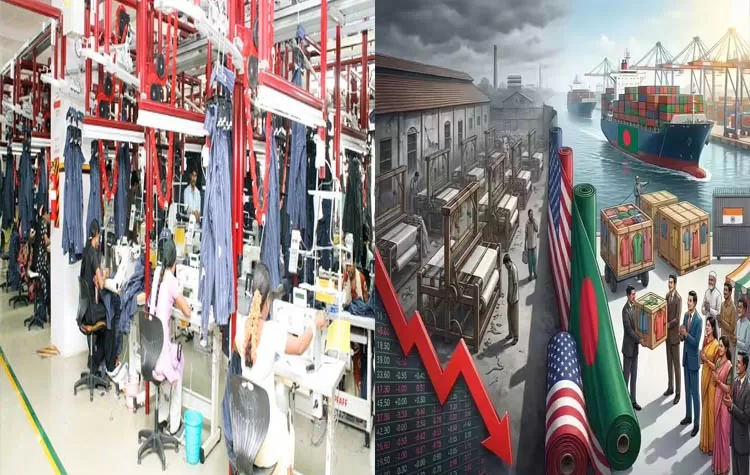
India’s Textile Industry To Gain From US Trade Terms Similar To Bangladesh Model
- The Union Minister Piyush Goyal declared that Bangladesh United States trade agreement benefits will help India advance its textile industry. He said that Indian companies will gain advantages when they import American yarn and cotton to create products which they will export back to America.
- Gandhi reacted to Goyal's statement which followed his earlier criticism. Gandhi had alleged that the government was placing pressure on the domestic textile industry due to US demands. Goyal explained to the audience what he expected to see in the agreement.
The US–Bangladesh Trade Agreement contains these particular details
- Bangladesh recently signed a trade agreement with the United States. The US government decreased its retaliatory tax rates against Bangladesh to 19 percent under this agreement.
- Garments and textiles made in Bangladesh using cotton or synthetic yarn imported from the US will attract zero tax. The total duty for regular garments manufactured without US raw materials amounts to 31 percent. This includes a 12 percent Most Favored Nation (MFN) duty and a 19 percent retaliatory duty.
- The retaliatory duty will not apply when Bangladeshi manufacturers use American imported raw materials. The only tax to be applied in this situation is a 12 percent MFN duty.
Expected Benefits for India’s Garment Sector
- Piyush Goyal stated that India expects similar benefits under its final agreement with the US. Indian companies will receive US duty exemptions when they import American yarn and cotton to produce garments which they will export back to America according to his statement.
- He stated that India will base its agreement structure on the US–Bangladesh agreement framework. He stated that this agreement would not cause any damage to Indian cotton farmers.
Impact on Trade and Market Access
- Goyal also highlighted India’s broader trade strategy. He said India has signed nine free trade agreements with developed countries. These agreements aim to expand India’s access to international markets.
- He concluded that similar trade benefits from the US could strengthen India’s textile and garment industry while maintaining support for domestic producers.